
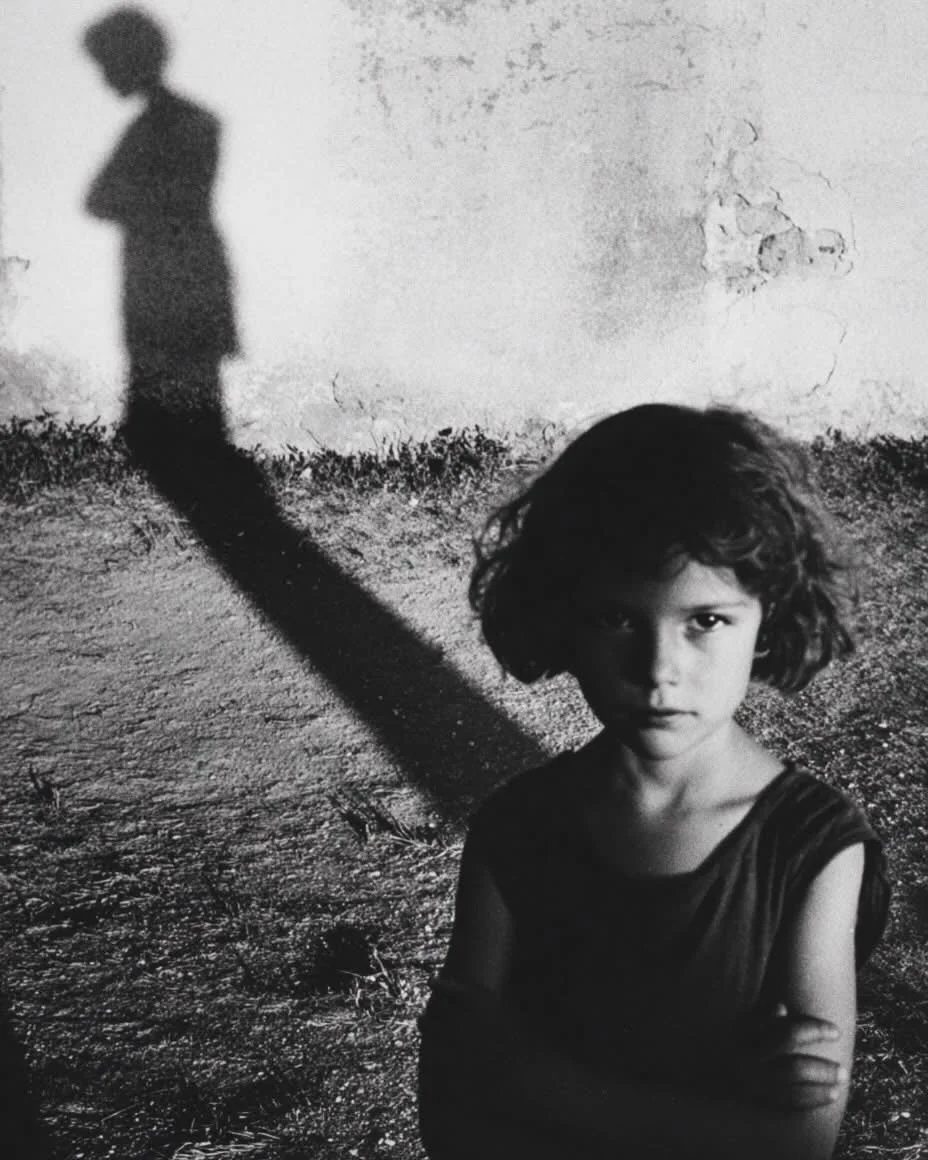
I was born with a genetic curiosity, spontaneously encouraged and naively cultivated by my grandparents, simple people who raised me alongside them, working in the countryside, until I went to kindergarten. There, I continued to experience the joy of discovery surrounded by educators fascinated by their profession and by children. With a few exceptions, of course, so as not to absurdly idealize, I was a lucky student.
When I want to retreat into the past for some solace and healing, I relive with my eyes closed how I would walk alone (I was convinced that notmy grandmother wasn't following me), at the age of three, the path from the gate of our house in Lucăcești to the kindergarten in front of the church and cemetery, where I was received directly into the soft embrace of Milica, the neighbor from across the street, a fresh graduate of pedagogical high school, who told me I was the most beautiful and well-behaved in the world and would fasten the pansies I gathered in my fists from along the fences into my hair with hairpins. Or I recall the years when I was transferred to the kindergarten in town and met the admirable Mrs. Keller, who deserves a monument in the center of Suceava, alongside one dedicated to Miss Boroș, the literature teacher, the people who strongly consolidated this city with their pedagogical work, I believe, through the generations they launched.
This ingenuous idyllic beginning made it possible for me to learn naturally and effortlessly at school. This methodologically drove my anxious mother crazy. I remember her hysterical exclamation, like someone who had toiled with pain and sacrifice all her youth to become the first university graduate in the village, also encouraged by a teacher who saw her as an intelligent and fragile firefly, not to be buried in the dust of field work: "When do you study??? Have you finished studying? I don't see you studying!" I didn't understand what it would be like to seewhen someone is studying, just as I didn't understand how you could seehunger.
The learning process is continuous, discreet, and invisible from the outside; at its core is the miracle of cognition, which happens naturally in a safe environment. Going to school was my purpose then; I learned things, and that was good. It covered with a sunrise dust the days when I fainted under the desk from anemia during communism, those when I screamed from untreated toothache, those when children seethed with envy, those when I received unjust, disproportionate punishments or those blamed on me because of cowardly others whom I didn't report. But these things also help with vigilance later. It was wonderful as it was, if I was burning with impatience for vacations to end and spent summers reading all those brittle, well-thumbed textbooks, getting drunk on their smell, drowned in printer's lead. Plus, at school, we traded stamps! And thus, we exchanged something much more valuable on the social market ‒ remarks with Otilia or Ciprian, the class leaders.
An exception to this rule of absolute happiness were two school subjects where it was believed that the application of physical punishment at a certain moment could bring speed and progress: history and mathematics.
In the fifth grade, the history teacher hit me out of the blue the minute she first entered the classroom. She greeted us and, walking down our row on her way to the teacher's desk, while we waited nervously with our immaculate notebooks open, she grabbed me by my braids and slammed my head against the desk, screaming, because from above she saw that the pages of my lined notebook were ruled normally with a ruler, like all the others in my backpack. However, she, being the school principal, had already stated in a noticeably raised tone at the parents' meeting that her subject was more special and that all students' notebooks for her class would be ruled not with blue or pencil, but with red, not at a ruler's width from the spine, but at one centimeter. And that with her, you had to study, otherwise it would be bad. She left students behind. She was the Party leader for the city and could do whatever she wanted. And she believed that the imperative in her voice was enough to activate the logic of the summoned parents.
It was my mother at the meeting, not me, and my mother, having three children and just as many meetings at the beginning of the year, noted, did, bought, and prepared everything, except for relaying to me the idiocy about the red pen ruling for history. She remembered selectively, focusing on what was more serious: she forced me to go with the lesson learned on the first day of fifth grade, before it was even taught, out of fear of this principal. The line must have seemed trivial to her. Being an ambitious child, I read the first lesson many times at home, knew it by heart, and wrote sentences before the teacher when she was teaching, amidst hiccups.
In that second of impact with the desk, my relationship with history ended before it even began. It's a permanent trauma, somehow, because it's absolutely impossible for me to remember years, even now, although I try and make dozens of analogies. I somehow saved the disaster by loving art history to the core (also thanks to the teachers who taught it to us religiously in high school) – and integrating the historical context here and there, so that I can rearrange events chronologically and ideologically in my head. It's a major handicap that I'm ashamed of, it's my vulnerability that I mask as best I can during classes. How do I deal with years? I read them.
(to be continued)
Cosmina Dragomir
Photography by Noemia Prada
See other episodes HERE!