
I just couldn't make my mother happy. She was the daughter of a thrifty shepherd and made her family proud by writing flawlessly her entire life, through five layers of carbon paper, tables with quality reports for machine tools exported from the factory. Not a single screw would escape, with a different millimeter than it should have been. She couldn't accept me suddenly demolishing, with my indolence, this whole castle of admiration. Mother had standards.
When she was congratulated for these out-of-the-ordinary things for which others noticed me ‒ for highly scored Olympiads or, simply, on the street, because I was wearing a wreath on June 15th, when all school celebrations were held in the courtyard ‒ she, programmatically, wouldn't crack a smile. Either these things didn't affect her, or she didn't want me to get a swelled head. Family validations can destroy someone's career, so no way! She had on her lips, with the modesty, solemnity, and dignity of a person who raises people, the same threat uttered with slightly rolled eyes, facing the interlocutor who complimented her on the exquisite education she was giving me: "Oooooh???! That's all she needs!!!". Not even a bravo, a hug, a glance towards me. I don't recall any maternal kiss or hug from my childhood.That's all she needs! there were many, however, befitting the success achieved.
To me, this either sounded like a compliment, because it happened when I achieved something good, or it smelled like a beating, and it created great confusion in my head. I mean, does this adult raising me really imagine that I win children's competitions out of fear of them? Without studying anything? Seriously? Children's competitions give you the drug of adrenaline over collateral bullying, and that is escape. Whether it's hopscotch, elastic band games, Macao, wrestling on asphalt, or a math competition. But adults in communism, especially the first generation of intellectuals from rural areas, loved their children differently from adults after the Revolution. They sleep soundly knowing they broke the vicious cycle by not beating us with sticks broken from the cow fence and by not covering us in blood except very rarely, when they hit us with the electric cord from the heater. And that they kept us in school, not with geese or sheep.
Alright, alright. But where did the logical fracture related to math come from?
Because that's what the text is about! ONLY that's what the text is about, the rest is context. Commie-like. I'll write the text on the next page.
The ambition of intellectuals in Suceava in the 70s-80s was to enroll their offspring with the best educators and primary school teachers ‒ career teachers, to make them people, as I said. The best primary school teachers handed over their class to the most prepared, prodigious, and feared (always feared!) Romanian and math teachers in schools. You were scared from around second grade that you'd see what Boroș and Botușan would do to you in fifth grade; it was like a cult. Fear gnawed at you until you met them.
My parents didn't think strategically much, in the sense that they moved me in the first days of first grade from a good, coveted school (Pedagogical High School) ‒ where I was automatically enrolled because it was a street away from our apartment building and where I had just adapted ‒ to the other general school located in a different neighborhood. Only then did they find a connection to get me in above the admitted number, so now, with me, comrade Ursu had 42 students in desks and her vocal cords plus nerves stretched to the maximum by effort. In that class, simultaneously, was all the political, and thus financial, elite of the city, and all the party bosses from enterprises, even the head of the county committee or something. I would say… the gastronomic elite of the region, people who had something in their fridge, who didn't have to kill themselves in lines to get milk for their baby and who had something to pack for the little ones at school. And who had money to tutor their child intensively after school, unlike us or the worker or teacher families who also ended up there through a "connection." With comrade Ursu, 95% of us had been labeled as smart and taught all at the same level, but our chances totally diverged in middle school. We were cynically told that "the sheep are separated from the goats."
All the deployment of resources was so that I would end up doing math with this professor in fifth grade. He was, clearly, a very good mathematician. He knew this, carried the frustration that his genius would have been better paid somewhere outside the country – and leaving was an inconceivable thing back then, so he perfected over time, like many others, a type of dark entrepreneurship, validated even in those times by the entire community that knew, kept silent, and swallowed it. Because it wasn't the private lessons themselves, but the harsh blackmail with their necessity that passed as normality. And people would hit their children in the backyard with rulers, belts, washing machine hoses, and electric cords from heaters if they didn't keep up with those who could afford private lessons.
In his early years as a teacher, this 'tutoring' thing was optional. Those who wanted a university career had it assured if they took lessons with him, even only in middle school. They sailed through high school whistling. He taught coldly, he taught well, but he never repeated any explanation for this reason; he taught a lot, you had no holidays, because you couldn't escape 300 pages of Gheba's problem collection. All parents had to subscribe to the Mathematical Gazette, but not all children naturally managed such a thing. In his class, you were like watching a TV show where everything was said once without hesitation, and at the end, it was over and the TV was turned off.
However, our man decided in his maturity to build a sumptuous villa from his 'teacher's salary'; he was almost moving into it, but the finishing touches never seemed to end, so he chose to force everyone, but absolutely all student classes in his last years before retirement, to take private lessons after school. First, he would hint at it to us during class, but being children, we didn't understand the language and it didn't occur to us to convey any of that nonsense to our parents. For instance, how could a 10-11-year-old child convey home: 'the math comrade said that to pass the class we urgently need to pay at the monastery'?! We didn't say anything at all.
We endured humiliation, ugly insults, astonishingly low grades on tests where the former Olympians among us knew they had solved everything, but, alas, not by his approved method... Parents panicked, gave us beatings akin to death, saw that even if we died, nothing would improve, so they asked the form teacher for his phone number. And, shortly, the whole class was divided into two camps: half with straight tens in math, those who solved everything perfectly on exams, and half with straight fours, who solved nothing. From time to time, one of those with a four from my camp would start getting, without a gradual climb, a ten from the very first new test.
'Tutoring' meant solving test and thesis topics in advance, teaching lessons beforehand, so that some could show they understood, so he, after filling a blackboard written with one hand, would quickly erase it with the sponge in the other hand, amidst our bursts of tears.Understood? Three or four yes, and that validated the erasing of the blackboard without us, the fools, being able to transcribe anything into our notebooks. In this way, the man ensured that we couldn't even do our homework with our mothers at home, because the engineer mothers didn't see what had been taught and would nag us about why we weren't writing everything from the board. And when he entered the classroom and whispered through his teeth take out a sheet of paper, I felt the cortisol rising, stinging and biting at my veins from the inside until I thought I would fall. It was a strange type of stress, never encountered before.
(to be continued)
Cosmina Dragomir
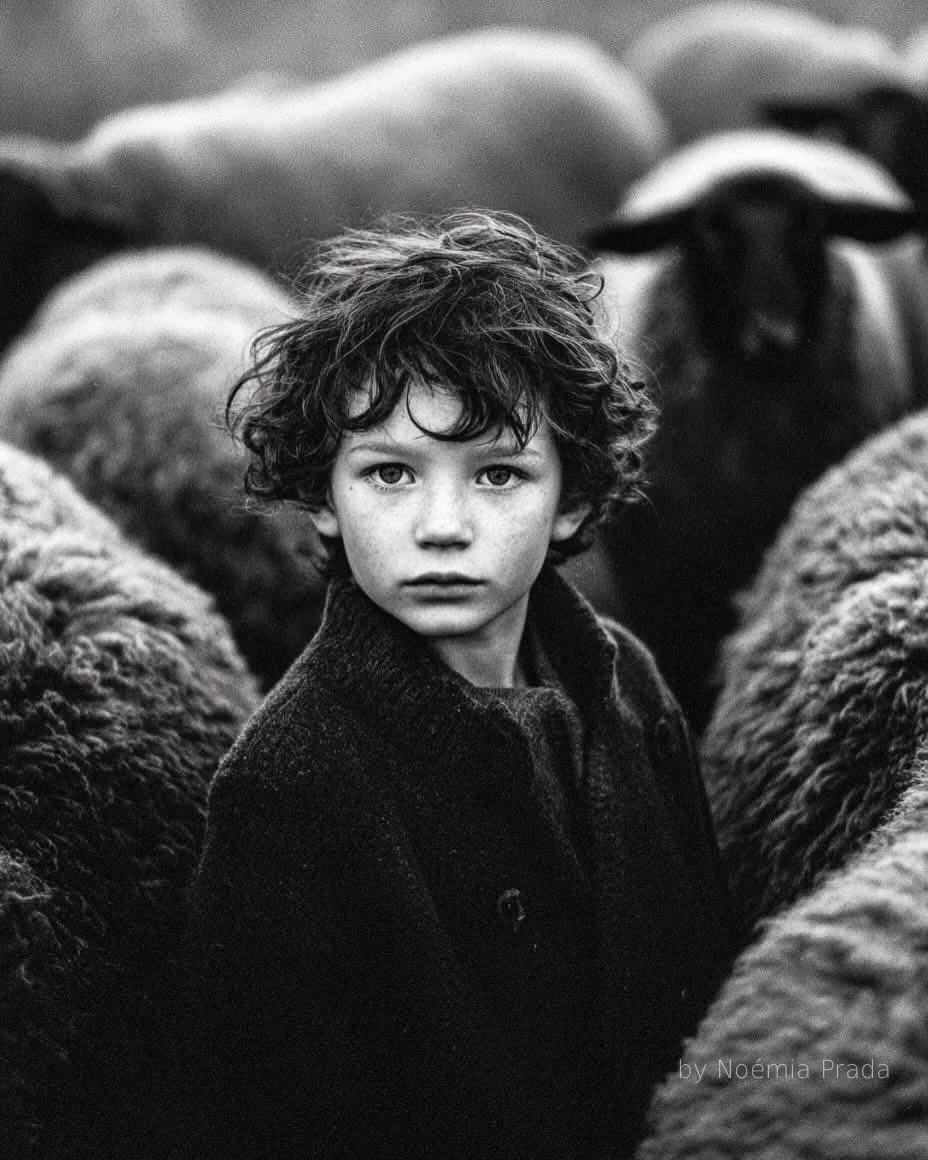
Photography by Noemia Prada
See other episodes HERE!