
Seeing that it didn't turn me into a dog, as was possible with a simple wand in the movie Arabela, and that the Christian God, whom I vaguely knew about from my grandmother, was more powerless than the Czech director, I deeply detested Him and, concurrently, from every neuron and drop of blood, I gasped at Him that I had to die. And the teacher had to die too. Repeatedly, until the thread broke.
I fell into a deep sleep and my parents couldn't rouse me until evening. Waking up, I became alarmed that even the prayer about dying hadn't been noticed. So I quickly had to fend for myself. Around me, in the last year, about three 'bad' children – 'they should be beaten and, like that, dead! How could they do something like that to their parents?' neighbors would comment – had hanged themselves in the small forest. Some for school grades, others out of fear of some punishment. So I needed to get some rope, because I knew very well how to climb trees.
This class was a ten in every subject in the region, and the man had transformed us all by the end of middle school into a pack of ferocious animals tearing at each other. And I found myself praying to become a stray dog without an owner. THAT DOG, exactly that dog, I had fixated on it like a schizophrenic. Searching for rope around the house, I only found some tangled fibers from the beard of the mask of a dubious former Santa Claus, who always made us sick when he visited. I didn't even know he had died and had left that stuffed dead man's mask right in our storage room.
Before I could get a rope for the small forest, the morning alarm rang again, and I had to go like this ‒ pale, blue, staring blankly, in rigor mortis, barely having tied my shoellaces – to school again.
I don't know why, because the students of 8th B weren't a target group, but the inspectorate became active in the last week of classes and sent, all of a sudden, a priest to our class and to the adjacent classes. Before religion was introduced into the curriculum, they sent him without apparent reason, simply. To speak to us, also out of the blue, about the sin of despair and what suicide means.
I don't know why exactly to us, because no one in our class had killed themselves. Mihăluță's brother, my desk mate, was older, so he had been in a different class when he hanged himself with his dad's belt, because he had sledded over a policeman on the sidewalk in winter and the policeman scared him, told him he would find him and put his whole family in prison because of him, so he died because he was stupid, right? He believed the policeman.
Ana's little brother hanged himself from the pipes in the bathroom because the Latin teacher failed him, leaving him to retake the exam over the summer, even though he begged to be tested to improve his grade, but she refused. Hearing the news the next day that he was absent because he was dead, the woman replied to the children in class that he deserved it if he didn't study, that society doesn't need parasites. He was in 5C, not in our class, he was only 11 years old.
And that girl from next to our building, who jumped from the balcony in the same year as all these others, 'flew' when her dad came home from work and she had done something, I don't know what, that she couldn't fix – well, besides it being her mistake, she was at another school. And then came the boy from the small forest who, also after a stupidity he committed on his own, punished himself proactively, out of responsibility, because he couldn't bear to have his parents do it anymore. These children were inspiring each other, but they weren't from our class, so what did the priest want with us? There was an epidemic of suicides, but we, those from 8B, were okay. Anyway, we perfectly understood those with the small forest and the pipes. Death in silence was gentler than death in screams. Parents would scream so loud the building would shake when they announced they would kill you, the only annoying thing was that they wouldn't finish, they'd stop at some point. With the promise to resume the process another time. But you died anyway. In your own way, more or less apparent.
At the hardware store, they didn't have rope first thing in the morning. But I really didn't understand now what that priest was doing in our class ‒ with us, everyone was alive. Or maybe Pupăză's little one, that spoiled girl with a nanny until fourth grade, had a nightmare and spoke in a trance, in her sleep? She surely doesn't sleep alone, with how much they pamper her!
The visitor had nothing special about him. I don't remember his face. He was a bald man, with glasses, wearing a cassock, extremely stressed. His stress tasted like a razor blade, with which we scratched our notebooks when we made a mistake with a pen. He was constantly wiping his glasses. He started in on us without an introduction, as if we had done something, and he gave us arguments as to why it's bad to commit suicide. That you cause pain to the parents who raised you.What? What are you causing??? Pain? To parents who would be glad if you died? To parents who promised you annually, monthly, or some even daily, that they'd kill you? To the community. Whaaat? Who ever cared?! Which community? The Body of the Church. What is that? We had just stepped one foot out after 50 years of communism, padre. We hadn't set foot in churches; we were among those secretly baptized at home, in a plastic basin, so the party wouldn't send our parents to the Canal. My first and last encounter with a priest.
But that man gave me a very important piece of information, which I didn't know. If you commit suicide, you anger God so much that He won't receive you in Heaven anymore. Neither my grandmother nor anyone else in the family had ever broached such a subject with me, so it was simply the first time I found out. How could they just suddenly start giving me ideas like that?
Suicides go to hell, with those who brought them there, you see. That really sounds bad. Unfair. If there were the slightest trace of justice in the world, that would be the inverse of hell's architecture. It was annoying how unfair God could be. It wasn't even worth dying to meet Him. To tell Him what…?
I played and replayed the scene with the rope in my head dozens of times when I wanted to calm down, but I didn't buy it anymore, because that priest came along, without charisma, bland as a person, but stressed, and his stress pained me. Who could that man be? My children, who are extremely cool and even good at math, wouldn't exist if he hadn't walked into 8B in '92. What was his name?
Also on the same day, with almost the whole class needing a final grade to close the situation, the teacher walked in annoyed, indifferent… It was clear he had been talked to, because he said disgusted take out a sheet of paper and he wrote on the board the most trivial and insulting problem, one of those we solved playing around in third grade, enjoying the graphical method, only now it was transposed into an algebraic equation. Everyone should have known it, perhaps except Rotaru and Colțuneac, who barely passed class even when they were little. Rotaru is in the last row, he can copy from Lazarovici or Iacob, who are geniuses. But what do we do with Colțuneac, who is in the first row, in front of me? He can't copy from me; this guy will see him squirming and turning around pleadingly, and give him a one.
I wrote beautifully and calligraphically. I repeat, the problem was trivial; someone with power from the hierarchy convinced the man to pass us, and he couldn't do more than that. Because I finished in a few minutes and no one had yet handed in the signed test paper to the teacher's desk, I tore out another page and wrote the solved problem as ugly as I could, once more for Colțuneac.
Colțuneac and Rotaru had illegible handwriting since they were little. Notebooks with red marks from top to bottom. I think I managed to write illegibly and yet legibly, so he could get a ten too, otherwise, he would have failed the year.
Getting up, I let the paper signed "A. Colțuneac" in the top corner slide onto his desk and took my own paper to the teacher's desk. Behind me, all the girls in the row stood up: Ungureanu and Isaic, Solcan and Vraci, Băsu and Lupașcu. Returning to my place, I saw that on Colțuneac's desk lay a fan of papers with writing that was more and more illegible, illegible with different personalities, signed "Colțuneac Adrian", from which he didn't know which one to choose to hand in. He picked one at random and hid the rest in the desk. I think he still keeps them.
When the prof brought back the corrected papers an hour later, all of which had a grade of ten, he asked thunderously:
- Colțuneac?!!! Are you an idiot?
The child froze, all the girls froze, the jerk caught us. Wouldn't it have been better if he died?
- Why, student Colțuneac, did you leave three tests at the teacher's desk???
Oh my God, the children from all the rows left papers signed with his name without knowing about us...
- Did you want to show me in desperation that you know more methods, you fool?
Oh, God, did Rotaru pass then too? Do you still know anything about Rotaru?
(to be continued)
Cosmina Dragomir
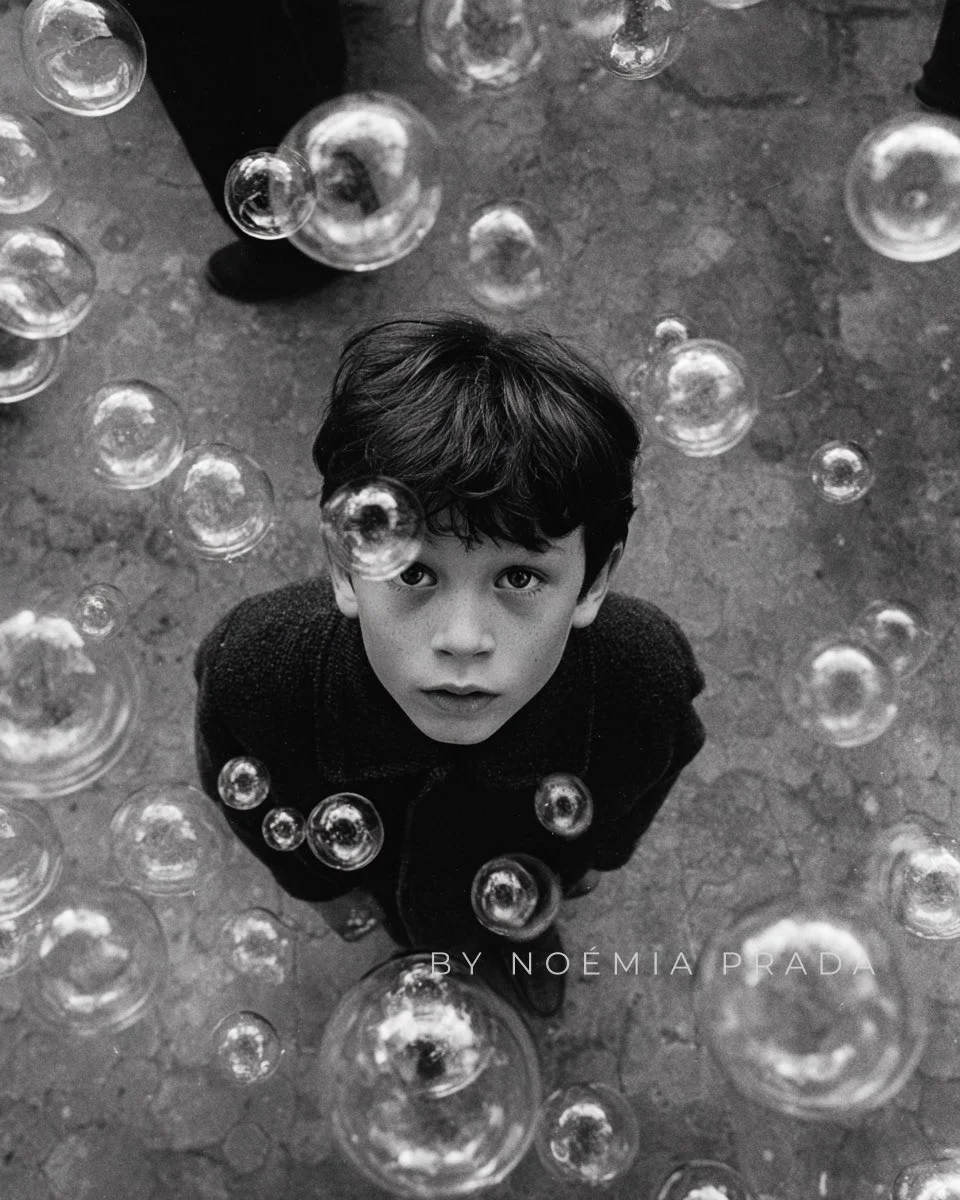
Photography by Noemia Prada
See the other episodes HERE!