
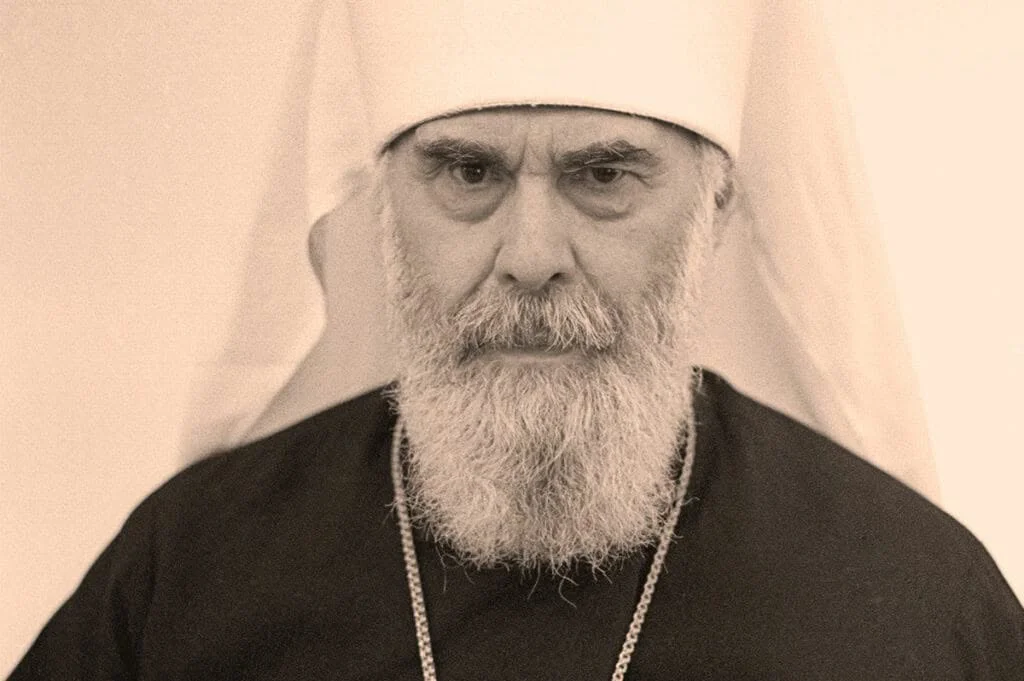
Metropolitan Anthony of Sourozh speaks to us
To parents whose children are growing up and who, after a period of being faithful, going to church, fulfilling everything their parents expected of them, suddenly declare: “No, I can no longer believe; prove to me that I must believe!”... What should parents do?
First of all, we must draw attention to the following: the child develops very unevenly. For the most part, they are educated at school, their mind develops, their knowledge expands, their concepts deepen, but very, very rarely do parents, along with this growth of the child's mind and heart, offer them new, more mature spiritual nourishment in the realm of faith. And, inevitably, a moment comes when in the consciousness of the child, who has already ceased to be a child, two principles contend: the 8-9 year old child and the 18-year-old adolescent. And the adolescent says: “No, you cannot believe in these fairy tales, it is too simple; life is much more complicated, there are many more problems. Science raises questions, life raises questions, and you want to remain a kind of ignorant person.” And in this case, I will say with all sincerity, frankly, that the child is right, not the parents.
As the child grows, transforming into an adolescent and then a young adult, they must receive new spiritual and intellectual nourishment. First of all, they must understand that their childish representations were only preparatory. Everything they could know through their experience, that is, through the comparisons offered to them, God's love with parents' love, those stories from the lives of saints that are presented – all these are, yes, true, but not the full measure of God's depth, not the full measure of what a person can know about God even at such an immature age. And parents often cannot explain anything else to their children, because they themselves have not thought about anything; they have remained "ignorant" in the realm of faith, while often being very developed in the realm of worldly culture and technology. This is the first aspect.
Secondly, we must draw their attention to the fact that, when we speak of faith, we are not speaking only of God; we are speaking of something much more complex, rather of a much broader notion. According to the definition of Saint Apostle Paul, at the beginning of chapter 11 of the Epistle to the Hebrews, faith is the assurance of things hoped for, that is, the assurance that there are things that cannot be perceived by sight, nor by hearing, nor by touch, nor by taste. And this can be proven very simply.
For example, we are all endowed with a notion of beauty. We look at an object, we look at nature, we look at a human face, we read one book or another, and we exclaim: “How beautiful it is!” And if someone were to ask: “But prove it to me!”, we cannot prove it; we can only tell that person, as Christ’s disciples told those who approached wanting to know about Him: “Come and see!… Read these verses yourself, look at this nature yourself; understand with your heart, and you yourself will exclaim: – How beautiful it is!”
The same can be said about love. When we say we love someone, we cannot prove it. We cannot prove that if we were to calculate their qualities, the final result would be: they are so remarkable, so wonderful, that you cannot but love them… This is not true. A person can fall in love with someone considered unattractive, because in them they saw an indescribable beauty, which does not catch everyone's eye and which they recognized through feeling.
There are people who love each other not because they are particularly intelligent or gifted, but for another reason. The French writer Montaigne was once asked how he could become friends with another writer, La Boétie: 'But you have nothing in common, how did you become friends?' And his answer was: 'Because he is he, and I am I.' Their encounter took place at depths that cannot be explained to anyone.
I had an interesting case in this regard. I was once leaving the 'Ukraina' hotel, dressed in a priestly cassock. A young officer approached me and said: 'Excuse me, are you a believer?' – 'Yes.' – 'But I am an atheist'… – 'I'm very sorry.' – 'But you, prove to me the existence of God! Show me God in your palm, and I will believe.' And as he extended his hand to me, I saw a wedding ring on it and asked him: – 'Are you married?' – 'Yes.' – 'Do you have children?' – 'Yes.' – 'Do you love them?' – 'Of course I love them!' – 'You're lying!' – 'What do you mean, I'm lying?' – 'But prove it!' – 'I work for them.' – 'That's social pressure.' – 'I buy flowers for my wife, sweets and toys for the children'… – 'Maybe you're afraid of your wife, that's all'… – 'But how so, what can I tell you?!' – 'There, show me your love in your palm, and I will believe in this love'…
The same can be said about faith in God. When you are told: 'Show me God in your palm,' you can answer: 'You cannot see Him, even if I were to show Him to you'… The realm of faith encompasses much more than the notion of God, and we must learn not to 'talk about God,' but to somehow convey our experience, to make people partake in this experience, just as one can partake in love, poetry, beauty, nobility, truth, and other qualities.
You can give a person the opportunity to immerse themselves, for example, in the Gospel, without prejudice, without seeking 'religious' answers in it, but rather tell them: 'But read and see, do you like this Man Christ? Could you be friends with Him? How do you like what He says? Does it sound like truth?' And, if the person says: 'Yes, this is indeed the truth,' then they are already a believer, without knowing it. But from that, one can begin.