
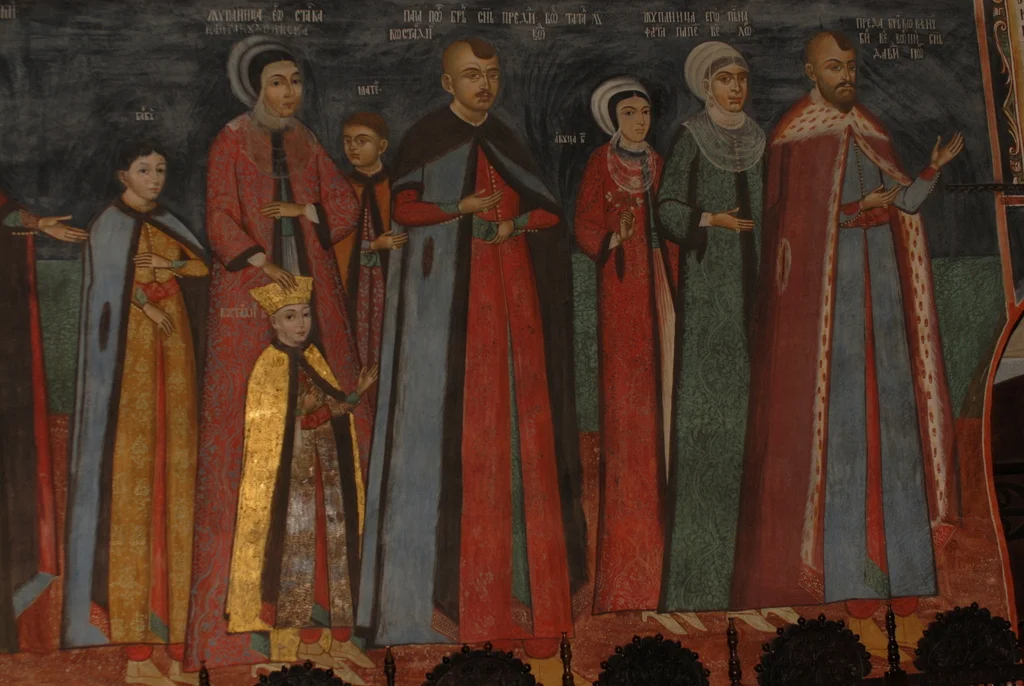
What were the "great boyars" in Wallachia? It is the title of a book written by a boyar himself, Neagu Djuvara. I highly recommend it to you! This book helped me better understand how the history of the Romanian Lands was written, through people.
Boyars existed even before the birth of the Romanian medieval states and continued to exist after their end. Even today, boyars are among us. Few, but they still exist. In a foreign document from the beginning of the second millennium, when states were not yet founded in our regions, a certain category of individuals is mentioned, whose presence and will were to be taken into consideration. The document calls them, in Latin, maiores terrae, meaning “magnates of the land”. From the old act, it appears that they owned large expanses of land, were respected as leaders of the people, and had the power to mobilize, if needed, an army from among their subjects. These are the ancestors of the boyars who would be so present in the documents of later princely chanceries. Starting with them, a social elite grew in our lands, a group of prominent people who would hold the reins of the country. Among them were both greater souls and poorer ones. There were great ascents, but also great betrayals. Neagu Djuvara proves with numerical arguments that the power of these families, which grew and multiplied over hundreds of years, lasted until the end of the 19th century. Sometimes it refers to financial power, other times only to spiritual authority and prestige. Hence two Romanian proverbs: “A boyar is always a boyar, even if girded with lime-bark” and “A boyar is known, be he rich or poor.”
Let's also give two examples, from among the grandparents of Voivode Constantin Brâncoveanu.
Vornic Preda Brâncoveanu was the paternal grandfather of Voivode Constantin Brâncoveanu. In several respects, he could be a prototype of the native boyar in Wallachia. He was master over many estates, a dignitary and close to the princely court, cared for many churches and monasteries, and built some from their foundations. He died a sudden death, killed in a political feud.
“This boyar is very rich and without equal both in this country and in any other country. And yet, his way of life is very simple, especially concerning his meals, at which he usually drinks nothing but water. But he is very merciful to monks and the poor, and is glad to build churches and monasteries and contribute to the upkeep of the clergy. He likes to build churches, making them the richest donations in oxen, sheep, horses, bees, households, mills, and serfs” (Paul of Aleppo about Boyar Preda Brâncoveanu).
Constantin Cantacuzino, the Grand Steward (Postelnic), was the maternal grandfather of Prince Brâncoveanu. He is also emblematic of a category of boyars in the Country, those who came from across the Danube, from the territories of the former Byzantine Empire, and settled here. The Postelnic descended from an ancient and noble Greek family that produced many prominent figures throughout history. In the first half of the 17th century, he was a high dignitary and a close associate of Prince Matei Basarab. He married Elina, a princely scion, and together they had twelve children: six boys and six girls. Through their kinship with the ruling princely family of the Country, the Cantacuzinos themselves became potential claimants to the throne and, over time, came to hold many high offices. Constantin the Postelnic, Lady Elina, and their sons owned vast tracts of land, built churches and boyar courts, which became models of their era. Their descendants also took names from the various estates they owned: Măgurenii, Mărginenii, or Delenii. Because baptismal names were also inherited by tradition, often leading to possible confusion, being surnamed after places and functions was a frequent method of identification at the time. Although he was blessed with a long life, Postelnic Constantin also did not die a natural death, falling victim to political games, which were often fatal back then. The murder of the elderly father would provoke a lengthy dispute between the boyar factions of the Country, for the Postelnic's descendants were many and powerful.
"He had succeeded in becoming prime minister, leader of all the country's affairs, advisor to all the boyars, at the head of whom he presented himself every morning before the Bey, and nothing was done without his counsel and direction."(Paul of Aleppo about Postelnic Constantin Cantacuzino).
Adriana ScripcariuFrom "Brâncovenesc Heritage Explained to All," Agatonia School Publishing, 2015
No comments yet. Be the first to comment!