
There are people we meet only once, but whose memory stays in our hearts for an entire lifetime. This is what happened to me with "Buni," an elderly woman I met years ago during an unfortunate moment, but in which – behold! – I wasn't alone.
I see the white ceiling and hear voices. How else could it be, when I'm lying on a hospital bed? I hear voices, but I don't see faces. I only distinguish different accents, authentic words, simple and beautiful expressions I strain my ear for, or hurried words, words angrily thrown out that I reject... After an interval that seemed quite long to me, thinking I'd had enough of lying down, I try to get up. I borrow a pair of slippers (taken from home on a stretcher, in socks, who would have thought of slippers?) and ask where the bathroom is. An elderly woman, serene as the sky, with snow-white hair and a floral dressing gown, offers me her arm to guide me. I smile gratefully, we walk together for a few seconds, then I feel, for the third time that day, the ground slipping from under my feet.
And it's true, I wake up lying on the floor with my feet raised, surrounded by nurses who are slapping me: "You really like being horizontal today!" The elderly woman, reprimanded as guilty, apologizes, saying she didn't know and just wanted to help... And that was indeed the case; she hadn't realized I was still so weak and dizzy. My salvation was the nurse who appeared in the hallway at the right moment, before I completely lost my balance. Otherwise, who knows what else might have happened.
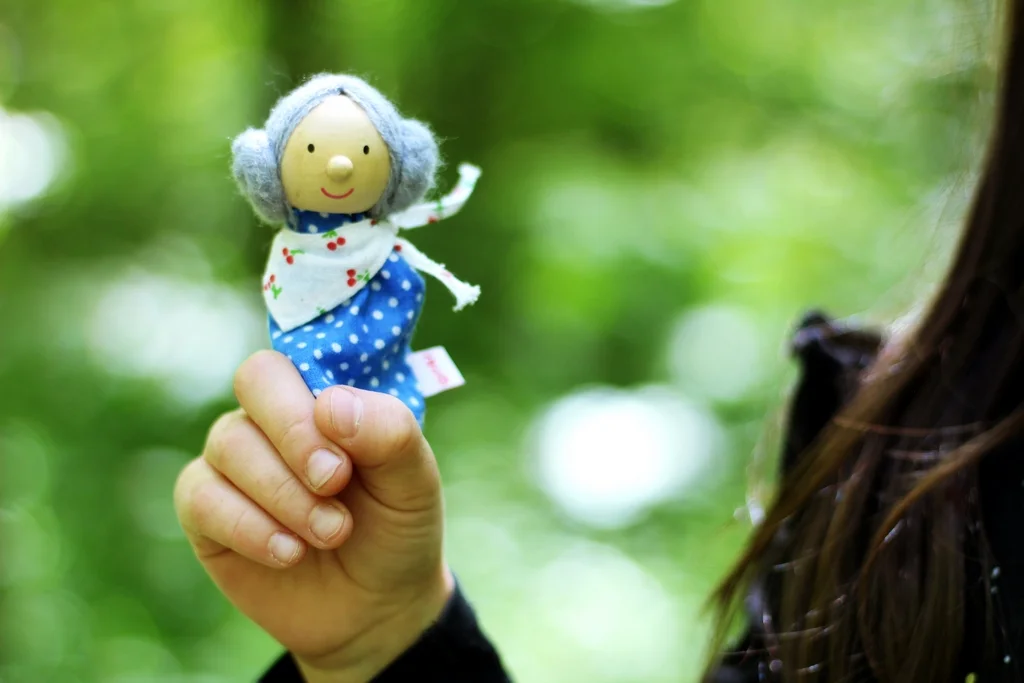
Called "Buni" by everyone, the elderly woman, serene as the sky, was my bed neighbor for three days, and not few were the life lessons I secretly learned from her. First and foremost, she reminded me of the beauty of simplicity. She was sincere, serene, all of a piece. Although a countrywoman, sometimes I had the impression I was speaking with an aristocrat. Everything about Buni was composure and naturalness. In the morning, after thanking God for waking up, she would wash her face, carefully comb her completely white and long hair and make a fancy bun, put on her floral dressing gown over her pajamas, then, slender "like a gazelle," she would go for a walk in the hallway. Since I hadn't had the chance to hear genuine Arad dialect before, Buni's expressions and words fascinated me. What initially surprised me was that she spoke about her son, who was about 40 years old, as "the baby." "The baby" this and "the baby" that, until I gathered the courage to ask her who the baby was, thinking it might be a grandchild.
Oh, if only I had remembered more of what she said! Buni used "păt" instead of "pățesc" (I suffer), "acle" instead of "acolo" (there), as well as diminutives like "molcuț" (softly/gently). (Unfortunately, given my condition at the time, only these stuck in my mind...). This elderly woman knew how to be serious, but also humorous, when the situation called for it. She listened, joined the ladies' discussions in the ward, spiced things up when necessary, and tempered the conversation when appropriate. One night, before falling asleep, I turned towards her bed. The ward had grown quiet; everyone was asleep or on the verge of falling asleep. Buni got out of bed, clasped her hands, and, with her body bowed, mumbled a prayer to the Mother of God, whose icon was fastened next to the mirror. A tear rolled down my cheek... Such composure and such serenity, all together in one person! That infinite blue, often joined by playful white wisps of clouds, remained deeply imprinted in my heart.
Georgiana Camalessa
Photograph by Georgiana Camalessa