
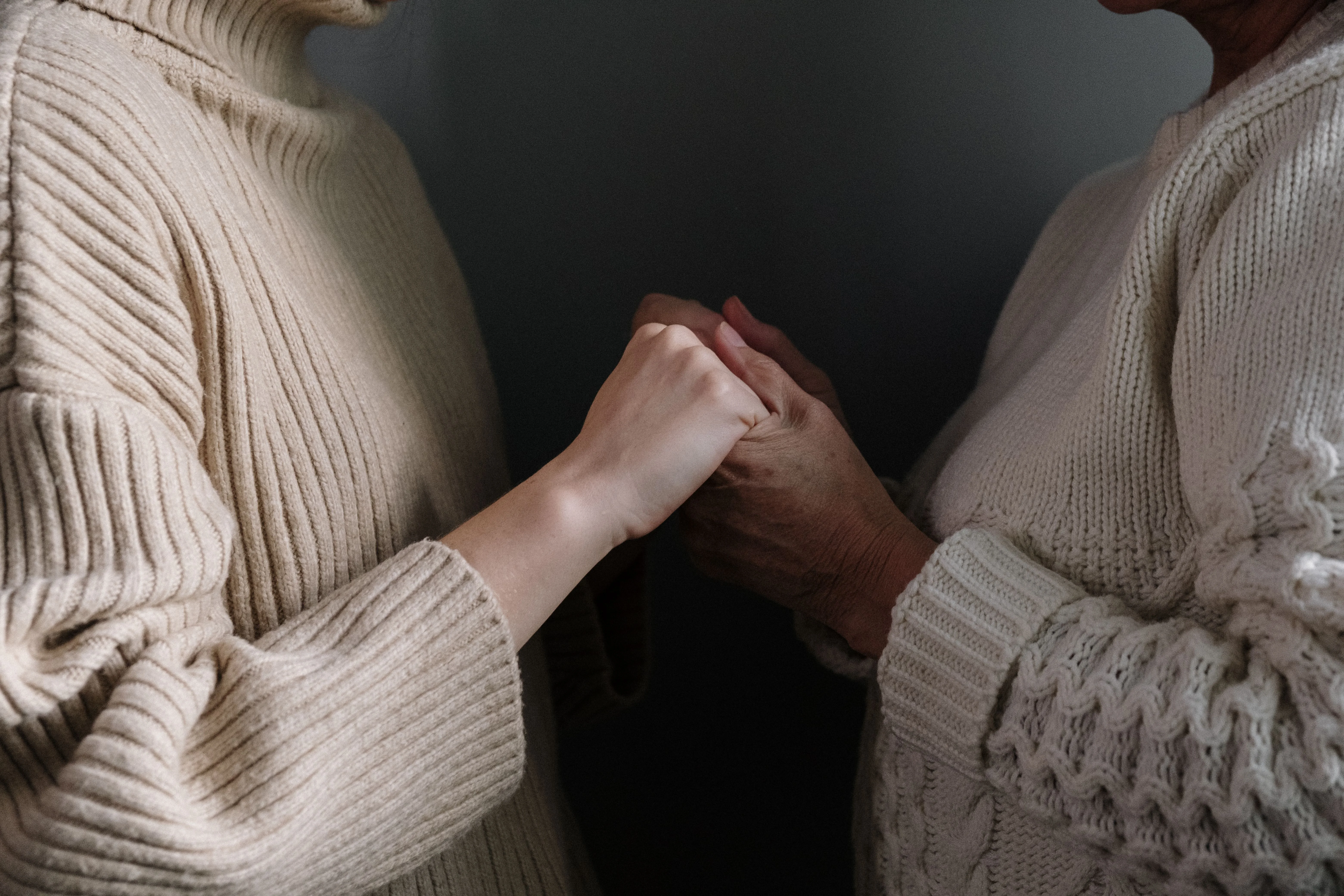
I promise I'm not going to bore you with the subject of "dementia," but I have another conclusion that I think might help. People affected by this disease, especially in advanced stages, can no longer lie; they lose this "incapacity."
We, who have control over our muscles, our impulses, our emotions, can speak kindly, even though we grit our teeth internally; we can smile instead of grimacing; we can refrain from hitting or scratching when scared. They, the sick, react exactly as they feel and think at that moment. They have thoughts, they have feelings, they have self-awareness, and they have a past, which is why each reacts in their own way to various environmental stimuli.
In childhood, I loved her the way children love their mothers, without seeing her flaws, weaknesses, limits. To me, she was the person who did everything right, who loved me, fed me, dressed me, listened to me, helped me.
As I grew up, and especially after adolescence, I saw more and more clearly that next to me was a complete person, with good and bad, who didn't always feed me, dress me, help me, or listen to me as I thought they should. I began to see the differences between us: different personalities, different ideas, different choices. I also experienced that moment of turmoil that some probably have in adolescence. Did she love me, or does she love me, if there are and have been so many things not right between us? Fortunately, I had a delayed adolescence, so I had enough maturity not to violently slam all the doors, deeds, and words of my confusion in her face.
Gradually, in our shared adult life, a new relationship began to form, because no matter how much we differed when we were together, we felt right. Little by little, I realized that I wasn't the only one building this new relationship, nor was I the only one adapting to the new person beside me; we were, in fact, two people meeting in the middle, without being bound by a pattern.
And, at one point, I felt that I had finally come to respect her, to respect the person within her, regardless of whether I called her mother.
That moment was when she was already very sick and very dependent.
Because she could no longer lie, I saw the gentle, generous, and humble person who was there, at her core. I saw that she never hit me, that she didn't speak harshly, that she didn't yell, that she didn't ask for food and water but received it if given, that she smiled and kissed me if I asked her, that she tried to comfort me, that she extended her arms to console a crying child, that in the psychotic episode she tried to save us all.
And then I felt a deep fear, a fear of myself. For I was different, with different personalities, different ideas, different choices. What would I give my children?
Initially, I prayed never to get sick to the point of being so stripped of my control. But anxiety grew, because the doctor in me knows very well that diseases are part of the natural order of our relationship with time and space.
But, at that time, God allowed me to meet several people affected by dementia, and I felt the love these people carried, their communion, and I became clear-headed. I began to pray for salvation, not just for the path.
God gives us love, and we and those around us are free to receive it and to give it. We don't have to, but it feels like we can't do otherwise.
Laura Ioana