
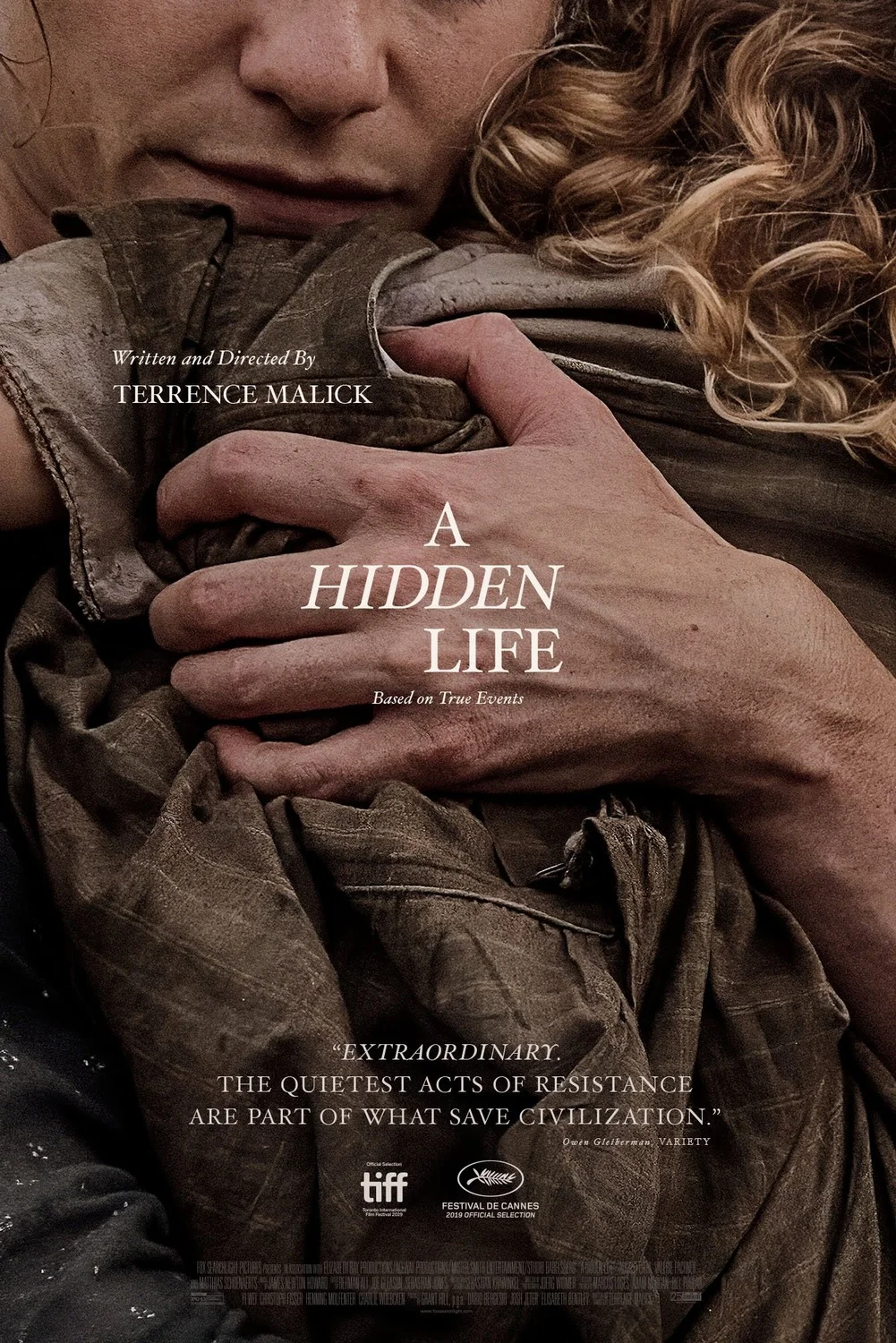
After watching Martin Scorsese's "Silence," Terrence Malick wrote to the director and asked him a question: "What does Christ want from us?" At that time, he was already working on "A Hidden Life."
I recently discovered the film. It is the story of Franz Jägerstätter, an Austrian farmer, husband of Franziska and father of three little girls. Called again to military service, Franz refuses to pledge allegiance to Hitler and serve the Nazi regime. He will be imprisoned and executed in 1943, at the age of thirty-six.
What does the resistance of a single man mean in the face of an evil that had encompassed a large part of Europe?
Franz knows that his refusal will not change the course of the war and that his family will bear the consequences of his decision. Those around him tell him the same thing in different ways. They ask him why he is sacrificing his life for a gesture that, in their eyes, serves no one.
His answers are few. His silence makes us wonder: how much of our faith depends on favorable circumstances?
In a church, Franz meets a painter who depicts scenes from the life of Christ. His confession touches, in another way, what Malick had asked Scorsese: what does it mean to portray Christ and to take His calling seriously?
Malick allows all of this to work through images, silence, and the rhythm of everyday life. The mountains, the mown grass, the wood of the houses, the wildflowers in vases, the tilling of the earth, and the light penetrating through the prison windows place the beauty of the world and human suffering in the same frame.
Watching Franz and Franziska at work, with their toiled hands, reminded me of Father Teofil. He liked calloused hands. He would have truly loved this family. Not only for their toil. He also liked delicate things.
Shortly after being sentenced to death, Franz, under guard and with his hands cuffed, accidentally knocks over an umbrella leaning against a door. He stops, bends down, and puts it back. He is about to die, and he stops for an umbrella. Evil can take almost everything from him, but not his delicacy.
Franz's decision also affects those who remained at home.
Franziska remains with the three girls, with the land, with the work, and with the hostility of the village. Franz hides the beatings he suffered in prison, and she spares him as much as she can from the burden of life at home.
In the end, on the black screen, only George Eliot's words from "Middlemarch" remain, written in white:
"The growing good of the world is partly dependent on unhistoric acts; and that things are not so ill with you and me as they might have been, is half owing to the number who lived faithfully a hidden life, and rest in unvisited tombs."
Franz Jägerstätter did not stop the war. He refused to give his consent to evil.
He remained free to the end. Hidden from men, known to God.
Fr. Ioan Gînscă