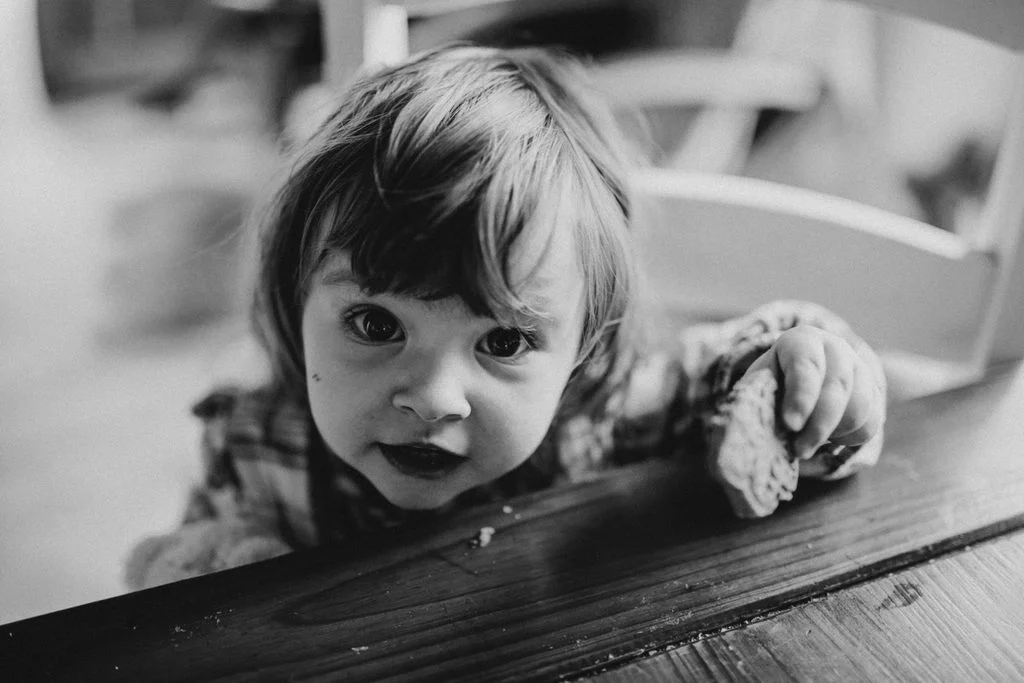
The child, the one through whom we draw closer to Christ.
Publish Date
- Mother Magdalena, please tell us a few words about your experience working with the children at Essex Monastery and about the connection you had with Saint Sophrony.
Mother Magdalena: It may seem strange for a nun to talk about children. I am not a psychologist, I am not a pedagogue, it's just that, through God's providence, I got to meet many children on Sundays and talk with them. This happened at the beginning of my monastic life, and Saint Sophrony gave me his blessing to dedicate my Sundays to children. He always advised me regarding their questions, my questions, the parents' questions. For 18 years, I received his concrete, practical, and prayerful advice. From them, I gathered what I wrote in books. That's why I am known as the person who works with children, although it is not my day-to-day activity.
- You played an important role in the spiritual formation of children and young people, both when they come to the monastery and outside of it. What does a child bring into the life of the world and into the spiritual life of those around him?
- When Christ spoke about suffering, he gave the example of a mother going through the pains of childbirth, but after she gives birth, she forgets the pain because she rejoices that a human being has come into the world. This shows that, for God, the birth of every child is a significant event – a new, unique person appears, different from God, although God created the child and ordained, through His providence, their coming into the world.
What does a child bring? They bring a new person. What do they bring to the spiritual life of those around them? Another person to love, in whom to practice the commandments, and through whom to draw closer to Christ.
In today's world, unfortunately, there is no longer talk about spiritual life. It is even ridiculed in most secular-minded schools. There are people who grow up without any prayer. And this hurts them deeply, because we know from the tradition of our Church that the life of prayer begins in childhood, from the first years of life, even before birth.
In this way, prayer and the relationship with Christ become natural for the child. Those who do not have this upbringing end up discovering God when they are already full of the world's propaganda. This is a very serious problem. And yes, the strongest education is in the family. We see that Orthodox families have succeeded in raising faithful children, even in societies where Christian education was forbidden – where there is a Muslim or atheist domination. The influence of the family is the greatest, for better or for worse.
- We live in a time when many no longer see a child as a blessing, but as a burden. How can we rekindle the joy of a child coming into the world in people's hearts?
- The world has become like a supermarket. Thanks to technological advancements, people believe they can choose what child to have, when to have them, as if they were making a purchase – all centered on the parents' comfort. This is a sad attitude towards children. How do we change this mentality? I don't know. But we certainly need to re-encourage the conviction that every child is a gift from God.
- Your books and conferences have brought much encouragement to mothers. What can you share from your experience with women who have carried deep pains – either after abortion or after giving birth alone, without support?
- I believe we need to make a clear distinction between the two situations. The pain of abortion is not the same as the pain of giving birth in solitude.
Abortion means ending a human life. It happens in different contexts, and the mother's responsibility can vary greatly; I won't go into details now. Not all mothers bear the same responsibility. But all should be encouraged to avoid abortion. If they cannot raise the child, they should receive support for adoption. And then, repentance is needed. Millions of children are killed every year. We all know that millions of Jews died in World War II – a great evil. And yet, every year we kill more, in elegant hospitals, with doctors and nurses. It is a crying shame. The sin is great, but any sin can be forgiven through repentance.
For mothers who gave birth in solitude, without support – even under these conditions, they can give love to the child, and that gives them strength and usually brings light into their lives. But this shows us how much thinking and prayer matter before a child comes into the world – right from the moment the two consider starting a family.
Today, relationships are treated with painful ease. The mass media reduces them to something cheap, when, in fact, they are a gift from God for man and woman, united in marriage for life. Education should work precisely against this superficiality. We live in a world full of passions; we must put forth the love that God commanded us to have.
- How can a young woman be helped to understand that being a mother is not the end of her life, but a new beginning, a co-laboring with God?
- First, she must understand that she is a mother from the moment of conception. A pregnant woman is not a 'future mother,' but a mother already. Everything she thinks and does influences the child. If she has negative thoughts about the child, the child suffers – and it is medically documented that depression during pregnancy can affect certain stages of the child's development.
As a mother, you no longer live only for yourself. You also live for the child, for whom you are responsible. The child is innocent and does not know how the world works. No matter how hard it is for you, it is important to continue. Otherwise, selfishness will sabotage your relationship with the child.
If you have a loving relationship with your child, it will be a joy from beginning to end. God has entrusted you with a child. You must turn to Him and tell Him that you want to be His co-laborer in the creation of a new person. Some will say that you have 'sacrificed' your life or career. No! Rather, you have entered a school of sacrificial love, which you cannot learn in any profession, nor in a life centered on yourself.
- What would you say to those who work in associations and support centers, but are afraid to open their hearts to the people they help?
- It's natural. Anyone working in care fields cannot bear all the pain of those they help alone. It's normal to have a balance. Associations must prepare their people: meetings where they can share their concerns, where experienced individuals support new ones, a time for rest when needed.
You shouldn't be afraid. If your heart gets tired, you need rest. Professionally, you can learn not to take problems home, so you're prepared for the next day. This doesn't mean being cold. You entrust those you help to God's care, and then you give yourself time to recover.
It's like a gardener with his tools: you have to take care of them, maintain them, but also you need to eat, to strengthen yourself. It's the same with our soul. We must be careful when we approach exhaustion. Prayer for those we help is the greatest relief: "Saint Nicholas, help Your servant, Mary; it's beyond me...". But you do your part for Mary.
Interview conducted by Alexandra Nadane
From Basilica.ro
Photography by Andreea Stanciu
2 Comments
Maria
Cât senin e pe chipul maicii! O școală a iubirii, mânăstirea și obștea de la Essex...
Anastasia
❤️❤️❤️❤️❤️❤️