I had the blessing of living a good few years in Greece and visiting many islands, monasteries, and places where saints lived. Beyond all the beauties I saw, something about the Greeks fascinated me: their way of life. Italians have dolce far niente. Greeks have siga-siga – σιγά-σιγά. Slowly, slowly or, more precisely, leisurely, gently (what beautiful words the Romanian language has!). It doesn't necessarily mean doing nothing. It means rather not turning every day into a race against the clock.
After sunset, you see Greeks at tavernas or gathered at home, almost always on the terrace. Grandparents, children, grandchildren, uncles, aunts… Meals are not rushed. A lot of talking happens. Even more laughter. Sometimes ten minutes or more pass between two bites. Greeks argue with such passion that you get the impression a lifelong friendship has just broken, and five minutes later you see them laughing and pouring each other wine (though I haven't seen drunk Greeks). I've always been fascinated by their zest for life. And, I admit, I found myself in it.
At one point, the opportunity arose for us to reach Patmos and Ikaria, two nearby islands in the eastern Aegean Sea. Patmos is known throughout the Christian world as the island where Saint John the Theologian wrote the Apocalypse (more precisely, dictated it to his disciple). Ikaria, however, had become famous for another reason: the longevity of its inhabitants. It is one of the so-called Blue Zones (“Blue Zones”), meaning regions known for an unusually high number of people who reach old age. And so, I arrived in Ikaria determined to discover its secret. I started promisingly: I grilled almost every Greek we met.
But let's start from the beginning. Ikaria has a small airport. When I say “small,” I really mean “small”! On my first landing there, I was convinced the plane had no more room to brake. The runway seemed like a piece of rock ending directly in the sea. In my mind, I was already doing calculations. The pilot, fortunately, didn't seem to share my concerns. We landed. I breathed. And we went to rent a car.
The Greek very relaxed gave us the keys and told us that, upon departure, we should leave the car in the parking lot, with the key in it. We looked at each other. “But aren't you afraid we’ll drive off with it?” The man laughed: “And where would you run off to?!” I have to admit: he had a very good point. We were on an island. Small!
Ikaria is mountainous, with scattered villages, roads that go up and down, and a great many wild goats that seem to consider the island theirs. Perhaps, in a way, it truly is theirs. But what I quickly noticed was something else: people didn't seem rushed. So we started our unofficial investigation. At tavernas, in shops, near churches, wherever we found a more talkative local, we asked them what their secret was and how people lived so long there. No one told us about any miraculous plant picked at midnight from a secret mountain. The answer always came back, in one form or another: “We don't rush.” And they laughed.
Ikarians eat simply and variedly: vegetables, greens, legumes, fish, fruits, meat. Olive oil and lemon, by the way, seem capable of going on almost anything in Greece. But I think it's not just what they eat that matters. It's also how they eat. Not standing up, not on the run, not each in a different corner of the house, but together. The meal is an occasion for gathering. And then I wondered: when did we come to consider two hours spent at the table with family as wasted time, while two hours spent on the phone seem absolutely natural to us?
I've always liked this lack of pretension among the Greeks. A tavern can appear almost anywhere. A few wooden tables, some chairs, a sidewalk, and the sea. Sometimes not even a sidewalk. Directly on the sand. And voilà, the tavern is ready! But people don't go there just to eat. They go to be together. I believe this is one of the beautiful lessons I've learned from Greece: a meal is not just food. It is communion.
Studies conducted on the elderly in Ikaria speak, among other things, about strong family ties and frequent social contacts. In other words, perhaps to live long, it's not enough to eat salad with olive oil. You also need someone to eat it with.
And since we've arrived at food, I can't help but say something about Greek pies! I've often watched Greek women rolling out the dough for pita – their pies with cheese, spinach, or greens (some are considered weeds or pig fodder by Romanians). It was almost a ritual. The dough was stretched patiently, the sheet became thinner and thinner, and their hands seemed to know by themselves what to do. I probably would have declared it thin enough after the first ten minutes. They continued. Siga-siga. Slowly-slowly.
Let's not forget the midday siesta. In summer, many shops close for a few hours around lunchtime. At first, the Romanian in you protests: "What do you mean, it's closed precisely now, when I need it?". After a while, you begin to understand that perhaps not all our needs are truly emergencies.
Another thing that impressed me in Greece was people's relationship with God. Sometimes, to us, Greeks might seem almost too familiar with holy things. They don't always have the forms of piety we are accustomed to. But, living there, I started to see something else. God is a natural part of their lives. So are the saints. So is the church.
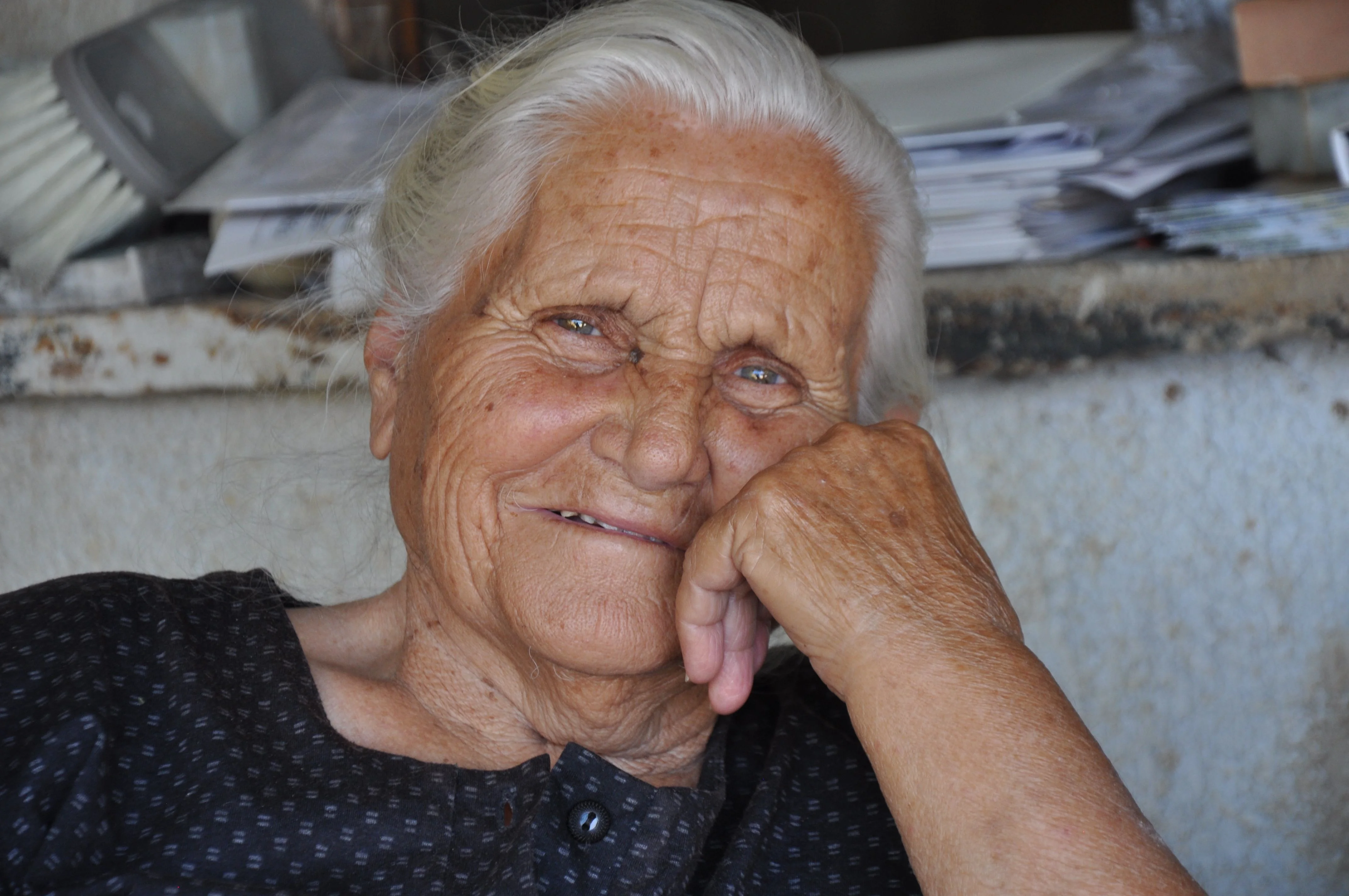
I met monks and nuns, chanters, but also ordinary locals, who had a joy that was hard to explain. They smiled a lot. They embraced. They enjoyed the person in front of them. And after the Divine Liturgy, the rush home didn't start immediately. They all stayed for a coffee and some voutimata – cookies perfect for dipping. A few tables and chairs placed next to the church and many stories. The communion from inside the church naturally extended outside. Nobody seemed to say: "Let's hurry, we have things to do!". Perhaps because this too was A job: to be with the other.
If I had to choose a single word for Ikaria, it would be serenity. To eat when you eat. To talk to the person when you talk to them. To drink coffee without checking your phone seven times. To stay after the Liturgy. To laugh. To sleep a little at noon. To enjoy the sun. And the sea.
Ah, the sea... I could write a separate article about it. So many times, in the years spent in Greece, I felt that the simple act of sitting on the shore and looking at it is pure therapy. Perhaps, when you live so close to the sea, you learn that not everything has to be conquered, used, and checked off.
I don't want to idealize Greece. Far be it from me to think that. Certainly, the Greeks have their flaws. But I believe we have something to learn from their good sides.
I went to Ikaria curious to find out the secret of people who live long. I was expecting, perhaps, a recipe, a food, a plant, something I could bring home in a bag. I found none of these. I found people who knew how to be together, to eat together, to pray together, to laugh together, and not to rush to leave each other's side.
We know that we cannot save ourselves alone. And yet, sometimes we live our days as if we don't need anyone. Perhaps we cannot take with us the sun of Ikaria, nor its sea, nor its roads where goats always seem to have priority. But we can take something from that siga-siga. A little peace. A meal where we don't look at the clock. A coffee drunk together. Ten extra minutes next to the person beside us. And maybe let's remember that life is not only measured by how many things we managed to do in a day, but also by how much time we had for the people next to us, whom God gave us.
Andreea Macra
Photos by Pete Miller Portraits, Wojtek Strzelec, Efrem Efre, Anhelina Vasylyk, Artūras Kokorevas / pexels.com