On the eve of a day when we will inevitably talk about children as the future of society, it's worth reading a text that poses a less comfortable question: how much room is left for children in a world organized around adult comfort?
In an article published in The Spectator, the reflection starts from an advertising billboard at Petersfield train station. The ad doesn't promise more beautiful beaches or better services. It promises a "completely child-free" vacation. The text touches on a broader phenomenon: children increasingly treated as a public nuisance, as an element that disrupts a world conceived almost exclusively from an adult perspective. The examples are concrete: restaurants, hotels, gardens, and vacations explicitly promoted as child-free spaces, but also comments published in the San Francisco Chronicle about dogs in restaurants. "I'd rather eat next to a dog than a screaming child," someone writes. Another adds: "Better dogs than children running and screaming." A third even proposes a vaccination registry for children, similar to that for dogs.
In Romania, the phenomenon has a different expression. We don't yet see advertisements celebrating the absence of children, nor a developed market for spaces declared "child-free." However, we increasingly observe a discreet and almost universally accepted solution. At the restaurant, on the terrace, at the airport, or at a meal with friends, the child receives a phone or a tablet. Be it one, three, or six years old, the screen appears almost instinctively. Adult conversation can continue undisturbed. Those around are not bothered. The child becomes silent, almost invisible. No one states it in these terms, but the result is the same: the child's presence is accepted on condition that it is not felt.
Romania constantly discusses demographic decline. At the same time, we increasingly value tranquility, control, and uninterrupted experiences. Childhood comes with energy, spontaneity, questions, and unpredictability. It doesn't adhere to the scenarios that adults prepare for it.
Beyond all this, there is another perspective. Father Teofil Părăian used to say that the little ones preserve the image of God in man more than adults do. Before being the future of society, they remind us of things that we, the adults, forget too easily.
Rev. Ioan Gînscă
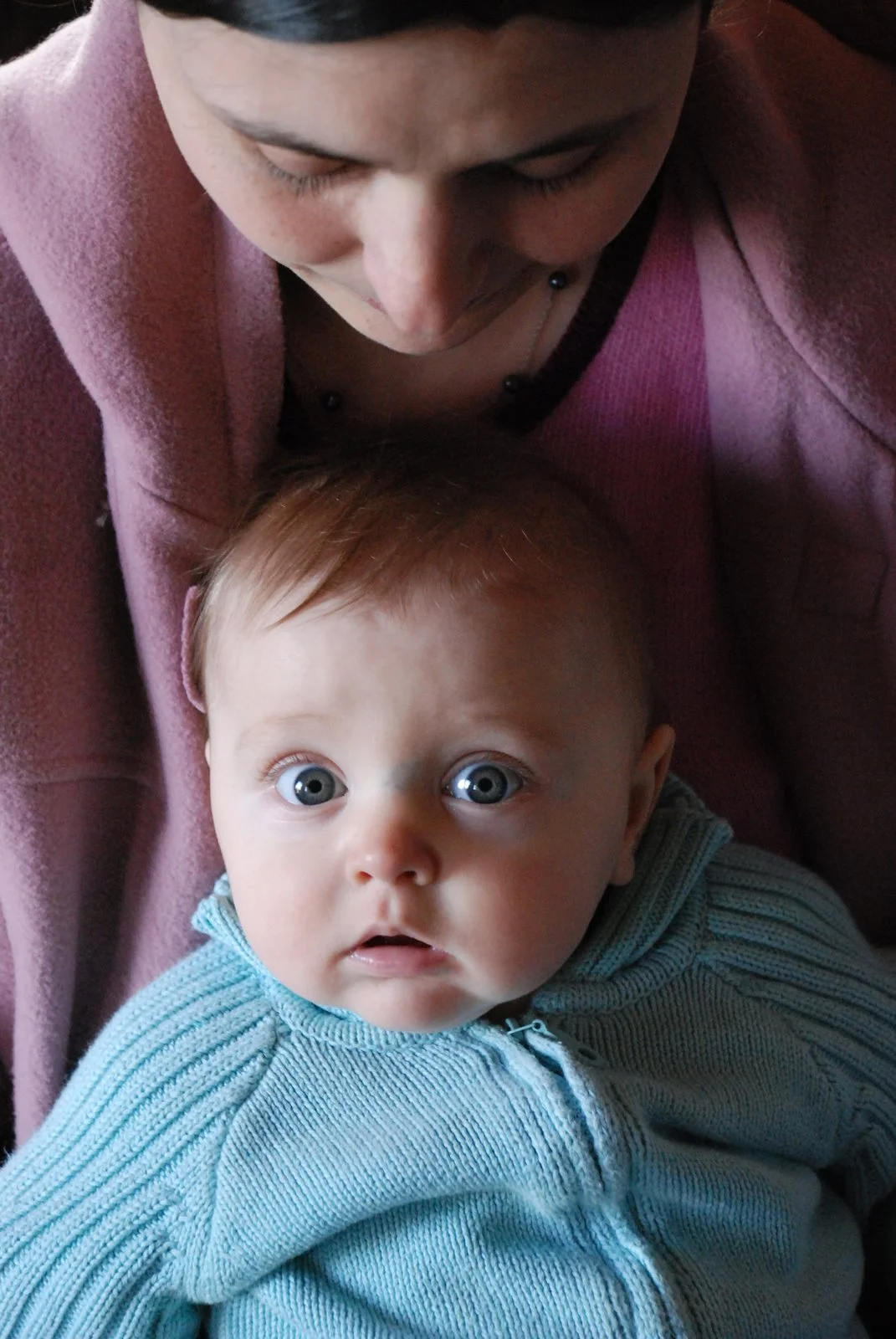
Photography by Anca Stanciu