It's evening. Finally, we finish with the monastic readings; we all eat dinner in silence, without speaking, listening to the monk who reads to us standing, in a loud voice (isn't he hungry, isn't he tired?). We rush to eat because soon the bell rings, a sign that the meal is over and we must get up, and we won't receive food until the next day after Liturgy. And it seems I've never been so hungry. The more experienced ones have some snacks in their room.
After dinner, those assigned to the kitchen clear the tables, wash the dishes, clean the hall, and prepare food for Sunday. Then there's the evening service, followed by a vigil until after midnight. Hours pass, night advances; we stand, sometimes we sit on the church benches, and, little by little, everyone gives in to sleep.
But until then, I stand in line for confession. A thousand thoughts run through my mind. What should I say? What's important? What should I ask? (because it's very important to ask the right questions). What are my truly essential problems right now? Many people are waiting to confess, and I don't want to take up much time. And then, I'm also shy; it's hard to open up there, it's hard to confess my mistakes in front of a practically unknown person. It intimidates me to stand before a monk whom an entire country knows and who is sought after by so many people. But I know from past times how much good it has done me.
I remember my first confessions. Like the nerd I am, I wanted to do things perfectly, correctly, to get a ten even on the subject of faith. So I took a guide to confession and... I was terrified! I checked almost all the boxes. At least I didn't practice witchcraft or deceit. No! No! That's impossible! I'm a good girl; I always have been. I can admit some mistakes, but this is too much! I don't like the mirror being held up to me. And this was before I even got to the more “serious” sins, which I don't want to admit and am too ashamed to say aloud in front of someone.
For me, the hardest thing to accept was the existence of sin. And the necessity of confession. Rationally, I would have run in the opposite direction. The very word “sin” provoked a reaction of rejection, of revolt in me. It seemed to me that sin was an outdated concept, from two thousand years ago. But I saw the devastating effects my sins (even if I don't want to call them that) had on me and on those around me, although back then I was blind to it. Sins were not just rules written in a book that I didn't respect, but mortal wounds in my soul. Outwardly, I was a cheerful person, with an interesting life, “lived to the fullest,” but in the end, that brought me nothing, instead leaving me with an unfillable void, with a sadness, a diminishment, a burden, a mire in my soul, from which I couldn't cleanse myself in any way.
Many times, I wondered why I suffered so many years of depression, which almost destroyed me? Why was I so lost? Why was there so much evil in my life, and my parents' lives? I can find some causes, speaking in psychological terms: the family situation, traumatic events I went through, chemical reactions in the brain, dysfunctional behavior and attachment patterns, an inherited predisposition to depression, the unresolved problems of previous generations. Or maybe the question is: why does God allow suffering? I don't know. But I don't believe everything can be explained causally, rationally, psychologically. Suffering is a mystery and has a purpose that I cannot see immediately, most of the time, or perhaps never fully.
With a heavy heart, I did that too, I confessed. Beyond the shame, there was surprise. It wasn't just that I was relieved of problems or received advice there, but it was something more. I couldn't explain it. For the first time, I felt free – a freedom I had never known. After that, I couldn't wait to go to confession again, even if it wasn't comfortable for me.
When I stand for confession, I don't want to think that I am standing before Christ, because this thought paralyzes me, yet I feel seen and known to the depths of my soul, beyond what I know myself to be, beyond the words I could say about myself. So all my attempts to prettify or justify my mistakes, pettiness, wickedness, judgments, lies suddenly become useless.
And then, there's the next step, communion. I don't understand what it is ‒ or, anyway, it's beyond my powers to believe that it is truly what it is said to be. The first communion of my life (after baptism) took place on Maundy Thursday during Lent, when I was thirty-seven years old. That moment remained so well etched in my mind... I felt it as a turning point, as a first step into a new life (the nth one?).
This doesn't mean that God suddenly solved all my problems with a magic wand. God is not the genie from the lamp who grants your wishes. He is not a guarantee for a happy life, free from hardships, effort, and pain. However, He gave me direction, support, and strength to fight my battles and guide my life towards good.
So I stand in line for confession, in the middle of the night, in the monastery church plunged in darkness, lit only by a few candles, amidst thoughts and memories, trying to concentrate on the service or the so beautiful psalm chants.
I am the prodigal son. I am the lost sheep. I am the sinful woman. I am the blind man, the lunatic, the leper, the dead child. Just like them, You healed me, embraced me, resurrected me, renewed me, even though I do not have their faith and love. I would like to ask You something. It's difficult, but I know You can do anything. Please, help me to forgive. Especially, I cannot forgive myself. I have made too many mistakes. Please, teach me to love. How do You manage to love all people? I truly can't do it. How can You love me, seeing me to the depths of my soul, with all my faults? I cannot love myself, no matter how hard I try.
Claudia Tănăsescu
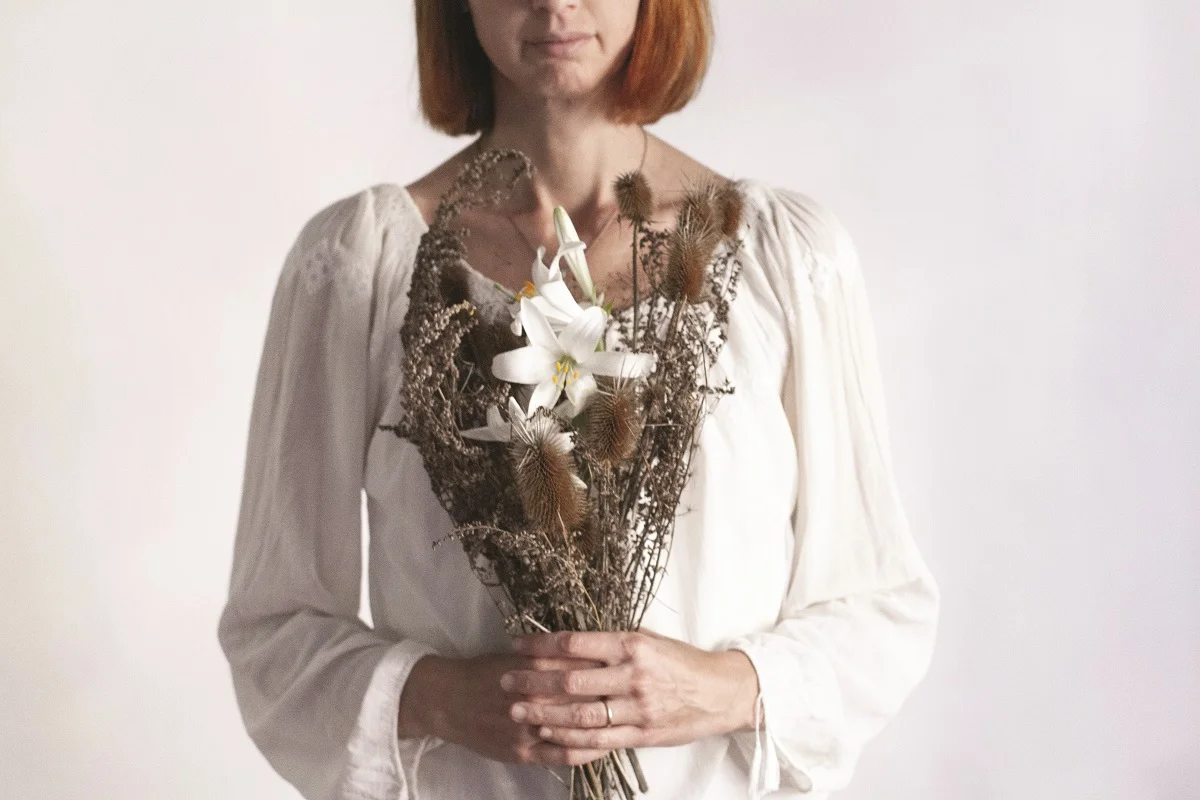
Photograph by Claudia Tănăsescu
Excerpt from the book "I Have Returned Home", Waldpress Publishing House, 2025