Wednesday, November 29, 2017, Jerusalem
I took bus 275 from the Mount of Olives to the Holy City. On the way, soldiers stopped us, boarded, and searched the bus for over a quarter of an hour. I watched both sides, the Jewish soldiers and the poor Palestinian Arabs, as they entered this dangerous game with dignity, how they stood staunchly facing each other, defending what they loved, each in their own way. I thought, while they were searching us, that I am jealous of these two peoples who do not give up, because my people gave up, without even being aware, the values that made them what they were. They did not keep their traditions, they forgot their words, they easily sold their lands, their words, their songs, their scarves, their stories. They did not cling tooth and nail to what they received from those before them. It modernized, it is agonizing. But I comfort myself that something more significant than all the rest has remained, the otpust “Through the prayers of our Holy Fathers...”, that is, this tradition of Niptic and Hesychastic Prayer. But let us know it, let us revive it, and let us strive to live it, for we can all cry out in our hearts to the Lord, to pray as we, the Romans, are, with the Prayer of the Mind. The true tradition of the Church is the tradition of my people. And I felt then that my people, my only people, are the Christian people, those who cry out the name of the Lord, and He will hear them.
Traveling by bus, I watched these Arabs and felt a great love for them. It is, perhaps, the effect of Jerusalem. It seemed to me that they also love each other, the Arabs and the Jews, but they don't know how to express it. I saw two young Arabs roughhousing at a shawarma shop. One of them turned to the other with that big sword. There was great tenderness between them, beyond the noisy commotion they displayed outwardly. Now I understand the Old Testament better too. We, with our small fears ‒ not to catch a cold, not to get caught in a draft, not to have our salary reduced, or not to be mocked by someone because we don't know something or other ‒, woe to us. There is need for courage, for a cry to the Lord. French manners are useless for anything. “To You, Lord, I have cried out, my God, pay heed!”.
Mircea Stanciu († October 29, 2019)
I arrived by bus at Damascus Gate at the eleventh hour. I entered. Because it was my first time alone, I got a little lost, but I asked and found the right way. Having arrived at the Church of the Holy Sepulchre, I did not enter immediately, for you cannot enter immediately; the soul must be anointed with the oil of prayer ‒ or at least, if you have no prayer, to bow your head, collect yourself, and step in slowly. Restrain every gesture. I entered, placed my head on the Stone of Anointing, venerated, and then I ascended and stood on Golgotha. I remained there without getting up for about an hour and a half, I prayed to the Lord, I read the Psalter, and my eyes were anointed with tears of joy and sorrow. I see the darkness in which I dwell. Alas, if the Lord's mercy does not come upon me, who will deliver me? No one will deliver me. Prayer is the best deed I could ever do.
I lingered with my prayer, weak as it is, in the darkness of my soul, but I stayed there. I would not have detached myself from Golgotha had it not been for the Lord's Tomb toward which I yearned. It is so easy to pray in Jerusalem! You pray constantly, it is natural; everyone prays. How can you not pray? What else could you do? You start talking to Him. Nothing else interests you anymore. You are alone and have no worries. No one expects anything from you. Your only burden is yourself, your passions. This way you understand a little what it means to be a monk, what it means to renounce everything. You are without worries, for you have only one concern: to find the One you seek.
I descended from Golgotha to the Tomb. I waited in line and entered. You must not pay attention neither to the left nor to the right. Be deaf and mute and blind, to keep vigil for the Lord within yourself. Enter as deeply as you can into the tomb of your heart and cry out to the Lord, Who will hear you.„One thing I have asked from the Lord, this I will seek: that I may dwell in the house of the Lord all the days of my life, to behold the beauty of the Lord and to inquire in His temple.” „I believe that I will see the goodness of the Lord, in the land of the living.” (Psalm 26:7-8 and 19).
I spent five hours like this at the Most Holy Tomb. What more can I ask of the Lord? Can one truly recount such a thing?
Mircea Stanciu
Excerpt from „The Journal of Healing”, a book forthcoming from Bonifaciu Publishing House
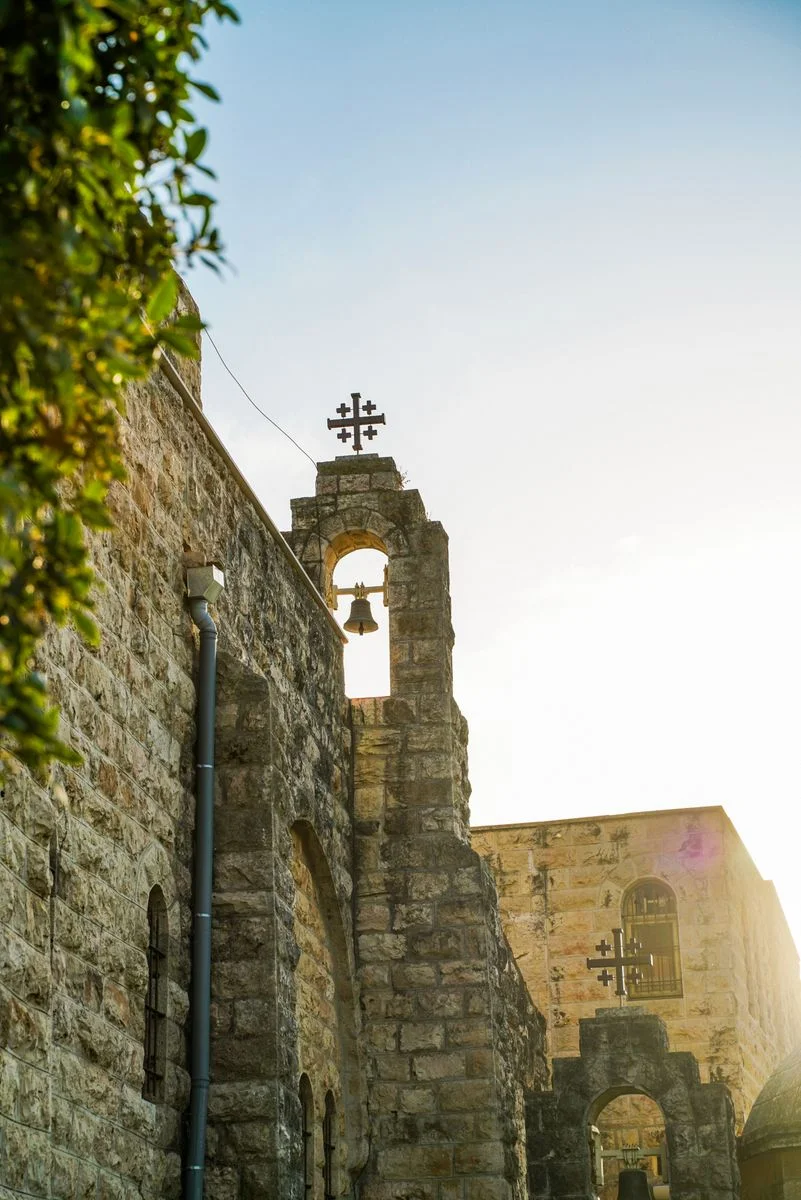
Photograph by Geox3 / pexels.com