The story of Peter Pan has taken deep root in people's hearts. Not because it's just a beautiful fantasy, but because each of us has felt, at least once, that secret desire: "for time to stand still... to remain here, just like this, forever."
It is a longing that never fades, the longing not to grow old, not to die, to remain alive.
For me, my childhood is not just a memory, but a living presence. I return there whenever life becomes too rushed, too burdensome, especially now that I'm in the diaspora. There, I am once again the child who didn't want to grow up.
I, too, had my Neverland. Not on an imaginary island, even though I now live on a real one, but in my grandparents' village. I remember country evenings when the world seemed simpler and truer. Grandfather would sit on the porch, speaking softly, and begin his stories. They weren't just anecdotes. They were entire worlds, full of meaning, of people and of God. In every word there was a tranquility that today I search for without finding it the same way. My aunt would sometimes continue the thread of the story, with the same gentleness, as if my childhood was a treasure they guarded together.
And then there was the song of the doves... that repeated, quiet cooing that floated over the yard like a prayer. Grandfather would remain for long moments, watching his doves with a child's eyes.
I didn't understand then why he made me be quiet and stare into space, but I felt, deep down, the desire to stop time. To remain there forever. The sun was slowly setting, the air smelled of warm dust and grass, and I was in Eden.
After the rain, the village changed. The earth breathed differently, and that wet scent, hard to describe, was like a promise to return. The lake came alive, and the frogs began their tireless chorus. It wasn't noise; it was a music of nature, a rhythm of life that moved forward, quiet and sure. I would sit and listen, in no hurry to go anywhere. There was no 'later'. There was only that moment.
And, in all of this, without knowing it, I was living a form of eternity. Not a conscious one, not an understood one, but a felt one. The child in me didn't want to leave there. He didn't want to grow up, because he felt that, with growing up, he would lose something essential to his own happiness. Then, without knowing it, I was like Peter Pan. A child who didn't want to grow up. Not because he refused life, but because he felt that something perfect was there, something that should not be lost.
But here the difference begins.
The story of Peter Pan, the child who refuses to grow up, touches precisely this wound and this thirst of human nature. However, if we look more closely, we see that between Peter Pan's dream and Orthodox Christian teaching, there is an essential difference: one is the flight from maturation, and the other is the call to perfection, to eternal life.
Peter Pan lives in a suspended world, where time does not advance and responsibility does not exist. He remains a child not because he has reached a perfection of childhood, but because he refuses to grow. In this perspective, his childhood becomes stagnation, a repetition without fruit, without sacrifice, without depth. It is a rootless youth.
In contrast, the childhood I carry within me now is not a flight, but a calling. It doesn't tell me: 'stay here and don't grow up,' but rather: 'don't forget what you felt here when you grow up.' Orthodoxy speaks of a different kind of youth without old age. Not a biological or psychological one, but a spiritual one. Man is called to grow, to mature, to fight with passions, and to reach 'the measure of the stature of the fullness of Christ.' Paradoxically, it is only after this maturation that man rediscovers true childhood: purity of heart, simplicity, total trust.
When Christ says: “Unless you become like little children…”, He does not call us back to the past, but forward, towards a state where the heart becomes clear and pure again. This is not the childhood of refusing to grow up, but the childhood of saints. Orthodoxy does not ask us to remain children in the sense of refusing to mature, but to become children in a spiritual sense. That is, to preserve the purity of heart, simplicity, the capacity to enjoy small things, the same things we experienced then, in our grandparents' yard, without understanding them.
From a spiritual perspective, I realize today that that longing was not just for places or people, but for a state of the soul. For purity, for simplicity, for a heart that knows how to rejoice in little things and transform the moment into eternity. In this sense, my desire to stop time was not a mistake, but an intuition: that there is a state in which man is whole, alive, at peace.
But that state is not preserved by fleeing, like Peter Pan, but is regained through a journey. Through growth, through struggle, through turning back to God. Thus, if Peter Pan flees from time, the Christian transfigures time. If Peter Pan remains stuck in an eternal, but empty, present, the Christian advances towards eternity, where time is fulfilled, not nullified. I often find written: “the time has been fulfilled,” “at the fullness of time…”.
Eternal life does not mean the endless repetition of the same state, but living communion with God, an endless growth in love. A conical spiral. We climb, we climb…
There is also a hidden danger in the ideal of Peter Pan: that of transforming childhood into an idol. Modern man, tired of responsibilities and suffering, sometimes dreams of a return to the past, to a life without worries, without pain. But this return does not heal, but postpones. Or even brings about depressive episodes.
Orthodoxy does not call us to flee from the cross, but to bear it, because it is precisely through the cross that the Resurrection comes. True “youth without old age and life without death” is not an escape from reality, but a transfiguration of it. It is not the refusal of maturation, but its fulfillment in God. The person who lives in Christ may grow old physically, but remains young in spirit. Their face lights up, their heart becomes pure, and their soul becomes ever more alive. But time does not stop. We leave, we grow, we move away. The village remains somewhere behind, people change or leave, and we become “somewhat grown up”. And yet, that child does not die. He remains as a light within, as a calling. And then, the true struggle is not to physically return to childhood, but to keep that spirit alive. Not to forget what it's like to be present.
I often go to the sea and see the waves. But they are not always the same. They remain, however, part of the sea. We remain part of eternity. Perhaps we cannot stop time. But we can learn to fill it with presence.
Today I understand that I cannot stop the time of childhood. Grandfather no longer tells stories, evenings are no longer the same, and I am no longer the child I once was. But what I experienced has not been lost. It remained as a seed. And perhaps true “youth without old age” does not mean remaining stuck in a memory, but letting that light from childhood grow with you. To arrive, after many detours, back at that peace, but consciously, deeply, in God.
In the end, Peter Pan remains a beautiful, but incomplete image, a human nostalgia for eternity, expressed imperfectly. Orthodoxy comes and fulfills this nostalgia, showing that true childhood is not lost through growth, but is rediscovered through holiness.
We are not called not to grow, but to grow until we become children again, not children of oblivion, but children of God. Peter Pan wanted to remain a child and… he remained alone, in a world without becoming. Man, on the other hand, is called to grow, so that, in a higher way, he may become a child again. Not a child of time that does not pass, but a child of eternity that does not end. And then, somewhere between the song of doves and the smell after the rain, between grandfather's stories and the evening's quiet, we begin to understand:
Eternity has not been. It is… it is… it is…
Fr. Daniel Anghel
Cyprus
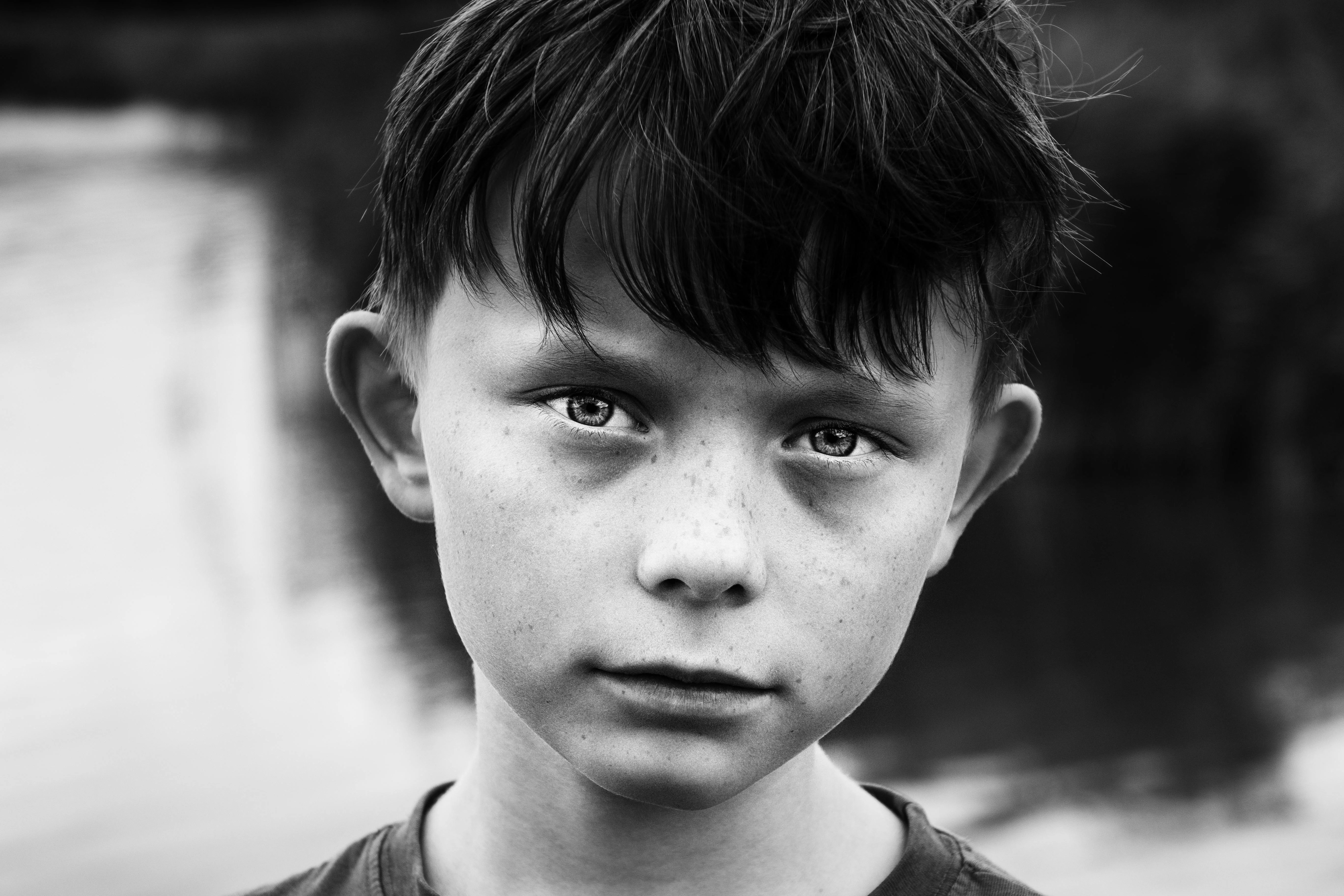
Photo by Artur Skoniecki / pexels.com