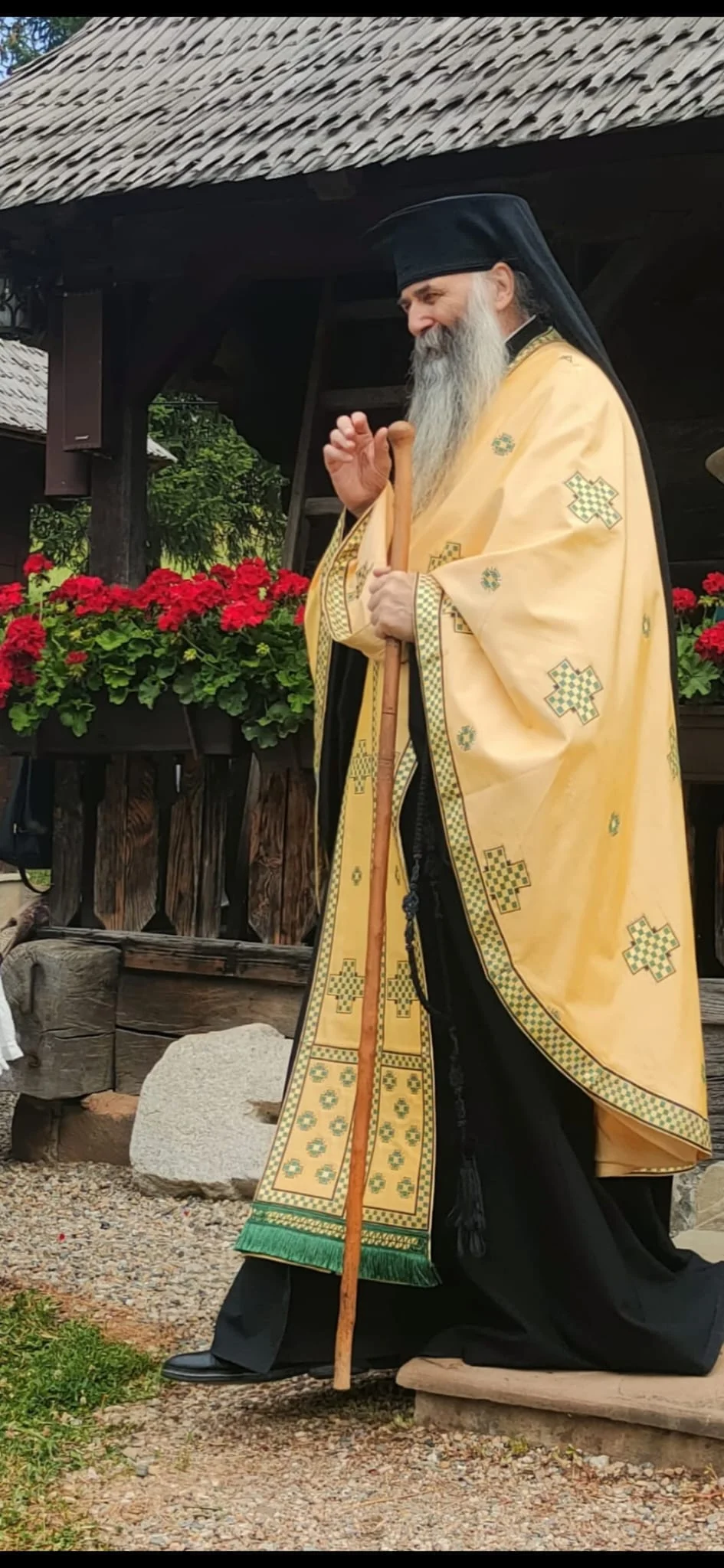
Protos. Ioan Cojanu († September 29, 2026) speaks to us
Today's Gospel urges us to mercy, but, as Christ frames this problem, it can seem to us not only difficult, but impossible to understand, and even more so to fulfill. My beloved, we are asked here to lead two parallel lives. On the one hand, to be in a relationship with God and to have as friends the members of God's household, meaning the saints. On the other hand, we must also be concerned with our relationship with the wicked, who seek to harm us. Furthermore, some end up harming themselves, which is why we cannot even condemn them. What can you do to a person who harms himself? Should you harm him too?
From the outset, Christ conditions our relationship with Him and with the good, meaning the saints, upon our relationship with the wicked, just as we, too, must condition our relationship with the wicked upon our relationship with God. Otherwise, we understand nothing, because we struggle to find wise, good people, just as the Apostle Paul himself tells us: „Bad company corrupts good habits”, while Christ urges us to love our enemies. You might say that He urges us to love them and leave them in peace, turning our backs on them. No, the Gospel does not say this. The Gospel goes very far, saying: „Do good!”. And it even details how to do good, for it argues thus: „God makes His sun rise on the good and on the evil, and sends rain on the just and on the unjust”.
Let us see the difference and even be attentive to people who do evil. But from this point on, we no longer know why someone does evil or how they got into this situation. We don't know how a person, created good by God, comes to be evil. We condemn the sin, but not the sinner. And how do we denounce sin, without touching the sinner? We denounce sin within ourselves. The sin of the other must not take root in me, and there must be nothing in my soul for it to cling to. The Savior uses a divine expression: „The ruler of this age has nothing in Me”. That is, we are so alien to sin that any relationship with it is excluded. This is sin. But the sinner is a sick person, whatever their sin may be. And how do we treat the sick? Not with malice, not even with indifference, but we try to make them understand that there is also another, pure kind of life.
In this sense, Christ gives us the solution: to love our enemies. How? By doing good. So, not by multiplying evil, my beloved. Evil must be minimized. In itself, evil has no power unless you give it power. For example, if a sinful thought comes to your mind, you give it energy to manifest in deed as well. It is the same with the sin of another. For example, if someone curses you and you give them power by cursing back, if you don't limit it by overwhelming them with good.
You might say that everything is clear now, but where does the power come from? Here, prayer and faith in God intervene. Well, we don't have the power to forgive our child, or our mother, or our father, so how can we have the power to forgive strangers who harm us?... It is natural to be powerless, but it is not natural to be proud and foolish, when God promises that He will give you power to tread on anything and nothing will harm you, and yet you do not ask. Why do you not ask? You will say that you asked. You didn't ask properly. Ask with tears, ask with humility: „Lord, give me the strength to understand the love You have given me, with which You love me, the sinner! How can You love me, You who are holy and righteous, and I, a sinner, cannot love a sinner?! I cannot, I repeat, I cannot!”. Do not try by yourself, for it is pride when you say: „I can manage on my own.” You cannot manage.
This is what happens to us, who strive to be faithful and look down on other people, as if from a balcony or from heaven. First of all, we are just as weak as they are, perhaps even as sinful as they are. Perhaps we don't even know how sinful we are. If we don't do what they do, it's because God has protected us and helped us escape one sin or another. This is why we are children of God: because God gives us spiritual birth and grants us strength through saints, through the Holy Sacraments, through the Church. God nourishes our soul with eternal life, with loving and perfect life, with an understanding that the human mind cannot grasp. You will understand even the incomprehensible things, if you ask God.
My dears, when Christ preaches on the mountain, He calls us to ascend the mountain of our perfection, but not a moral or ethical perfection, but a divine one. Therefore, I should not compare myself to anyone, but rather pay attention to what God asks of me and what I do. Let the distance between the measure of perfection and my current level be the only thing that captures my attention. And then, why should I concern myself with the wicked? I should not do so. In my spiritual life, God manages different situations or "materials" with which I am to work on my perfection. And one of the most common "materials" is the wickedness of the world. God allows this, although it is true that the devil busies himself particularly, not knowing that if he confronts a holy person, that person sends him to hell with all the traps he has set for him. Unfortunately, he doesn't only encounter holy people, but even among our good Christians, he often encounters people who are not attentive and fall. However, God, through the Church and His saints, helps them to rise.
This is how we should view our enemies! This is why the Church asks us to understand that loving our enemies is a treatment for us, we just need to know where to get the medicine. Amen.
(Fragments from the sermon on the 19th Sunday after Pentecost – The Sermon on the Mount. Love for enemies, September 30, 2018)
2 Comments
Anastasia
Anca mea dragă, îți mulțumesc! Parcă articolul a fost pus exact pentru mine! ❤️❤️❤️❤️❤️❤️❤️❤️
Anca Stanciu
Dragă Anastasia, și pe mine m-au marcat cuvintele atât de adevărate ale Părintelui. Domnul să-l odihnească cu sfinții! A trecut la Domnul săptămâna trecută…